Chartres Cathedral
A High Gothic cathedral and UNESCO World Heritage Site.

via Wikipedia: Chartres Cathedral · see source
Chartres Cathedral, officially Cathédrale Notre-Dame de Chartres, is a Catholic cathedral in Chartres, France, about 80 km (50 miles) southwest of Paris, serving as the seat of the Bishop of Chartres. Dedicated to the Virgin Mary, it was mostly constructed between 1194 and 1220, standing on the site of at least five earlier cathedrals dating back to the Diocese of Chartres' formation in the 4th century. It is one of the best-known examples of High Gothic and Classic Gothic architecture, built above Romanesque basements, with a north spire in the Flamboyant style (1507–1513). UNESCO designated it a World Heritage Site in 1979, calling it "the high point of French Gothic art" and a "masterpiece."
- Location
- Chartres, France
- Construction period
- 1194–1220 (main structure)
- Height (north spire)
- 113 meters (377 ft)
- Height (south spire)
- 105 meters (349 ft)
- Style
- High Gothic, Classic Gothic, Flamboyant (north spire)
- UNESCO designation
- 1979
- Notable relic
- Sancta Camisa (tunic of the Virgin Mary)
Lore & Background
The cathedral's history includes at least five earlier churches on the site, the first dating no later than the 4th century. Fires in 743, 858, 962, 1020, and 1134 damaged or destroyed successive buildings. After a devastating fire on 10 June 1194, only the crypt, towers, and new façade survived. Reconstruction began almost immediately, funded by patrons across Europe, and the major portions were finished within 25 years. The cathedral was re-consecrated in October 1260 in the presence of King Louis IX of France. Later modifications include the addition of a chapel dedicated to Saint Piatus of Tournai in 1326 and another chapel in 1417 by Louis, Count of Vendôme. In 1506, lightning destroyed the north spire, which was rebuilt in the 'Flamboyant' style from 1507 to 1513 by architect Jean Texier. On 27 February 1594, King Henri IV of France was crowned in the cathedral. In 1753, the interior was modified: stone pillars were covered with stucco, tapestries replaced by marble reliefs, the rood screen removed, and some stained glass replaced with grisaille windows. During the French Revolution, a mob attacked the north porch sculpture but was stopped by townspeople. The local Revolutionary Committee planned to destroy the cathedral with explosives but consulted an architect for placement.
Reader's Guide
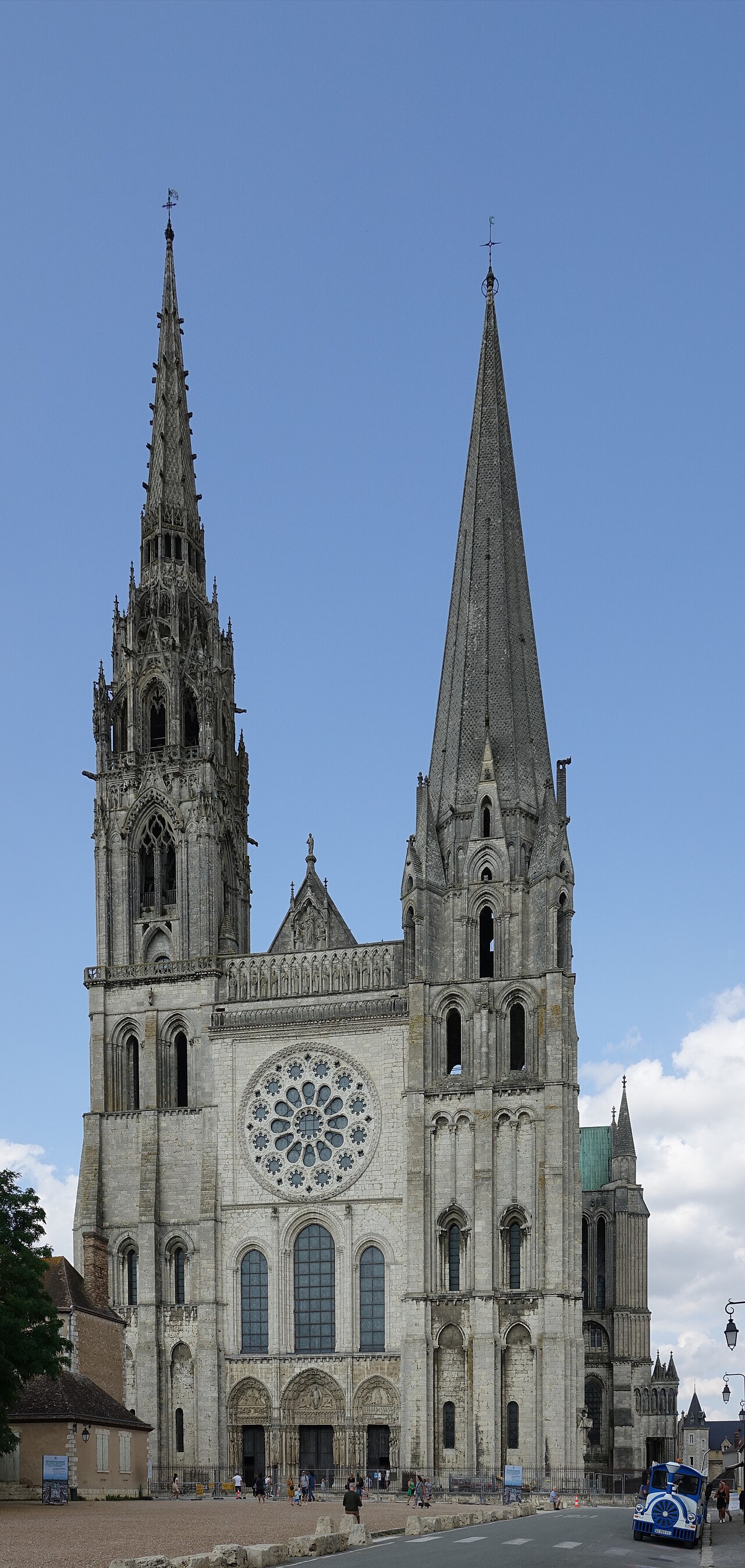
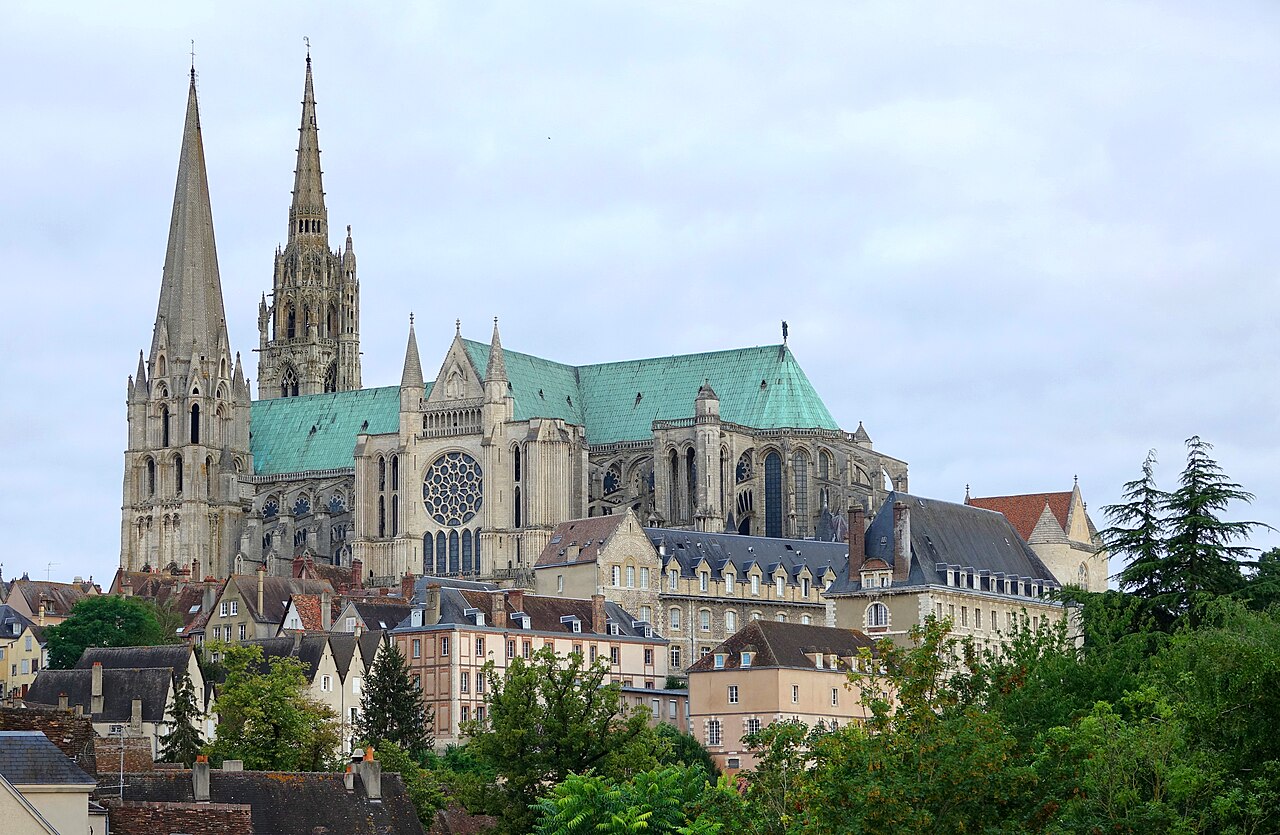
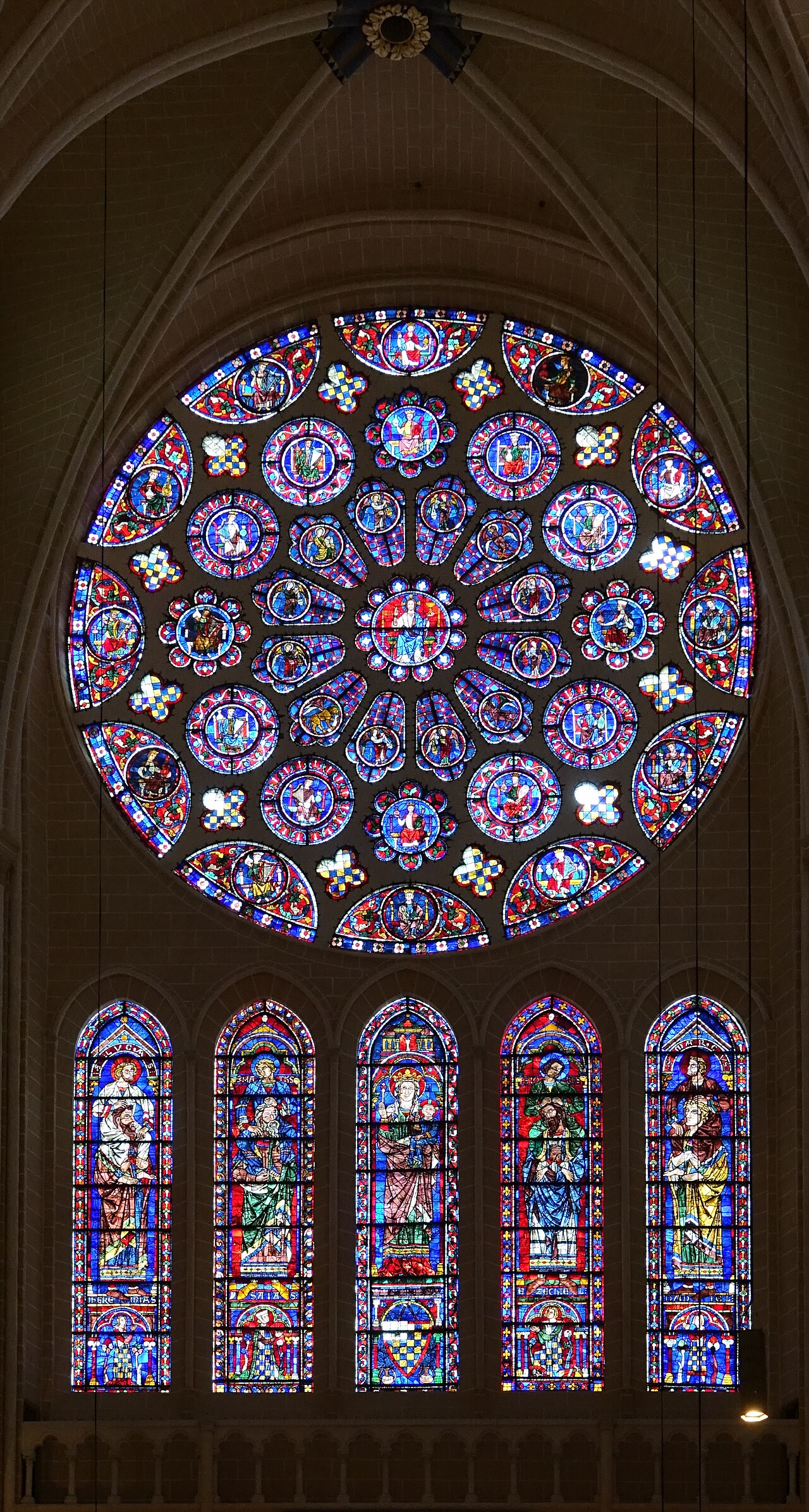
Chartres Cathedral is a seminal example of High Gothic architecture, noted for its rapid construction and preservation. The building's exterior features heavy flying buttresses that allowed for large windows, and its west end is dominated by two contrasting spires: a 105-metre (349 ft) plain pyramid completed around 1160 and a 113-metre (377 ft) Flamboyant spire from the early 16th century. The three great façades are adorned with hundreds of sculpted figures illustrating theological themes. The cathedral retains the majority of its original stained glass windows, with only minor architectural changes since the early 13th century. Since at least the 12th century, it has been a major destination for Christian pilgrims, who venerate the Sancta Camisa relic, said to be the tunic worn by the Virgin Mary at Christ's birth. A Black Madonna statue was crowned by Pope Pius IX on 31 May 1855. The cathedral also attracts secular tourists. Its designation as a UNESCO World Heritage Site in 1979, described as 'the high point of French Gothic art' and a 'masterpiece,' underscores its historical and artistic significance. The cathedral's survival through fires, revolution, and restoration efforts highlights its enduring importance as a religious and cultural landmark.
Did You Know?
- The cathedral stands on the site of at least five earlier cathedrals, with the first church dating no later than the 4th century.
- On 27 February 1594, King Henri IV of France was crowned in Chartres Cathedral instead of the traditional Reims Cathedral.
- The north spire, rebuilt from 1507 to 1513 after lightning destroyed it in 1506, reaches 113 metres (377 ft) and is built in the Flamboyant style.
- A Black Madonna statue enshrined in the cathedral was crowned by Pope Pius IX on 31 May 1855.
- During the French Revolution, a mob attacked the north porch sculpture but was stopped by a larger crowd of townspeople.
A History Written in Fire and Stone
The ground beneath Chartres Cathedral has been scarred by repeated destruction. At least five cathedrals have occupied the site since the Diocese of Chartres was established in the 4th century. The earliest known church, built no later than that century against a Gallo-Roman wall, was torched in 743 on the orders of the Duke of Aquitaine. A second structure fell to Danish pirates in 858. After a fire in 1020, Bishop Fulbert launched an ambitious rebuilding campaign, appealing to royal houses across Europe and receiving donations from as far as Cnut the Great of Norway, Denmark, and England. In 1145, a wave of popular religious fervour dubbed the 'Cult of Carts' saw more than a thousand penitents haul carts of stone, wood, and grain to the construction site. The 1134 fire damaged the façade and bell tower, prompting further work. Then on the night of 10 June 1194, a devastating blaze consumed the nave and upper levels, sparing only the crypt, the two west towers, and the Royal Portal. Reconstruction began almost at once, and the major portions of the new cathedral were largely complete within twenty-five years—an extraordinary pace for the medieval period.
Architectural Mastery and Gothic Innovation
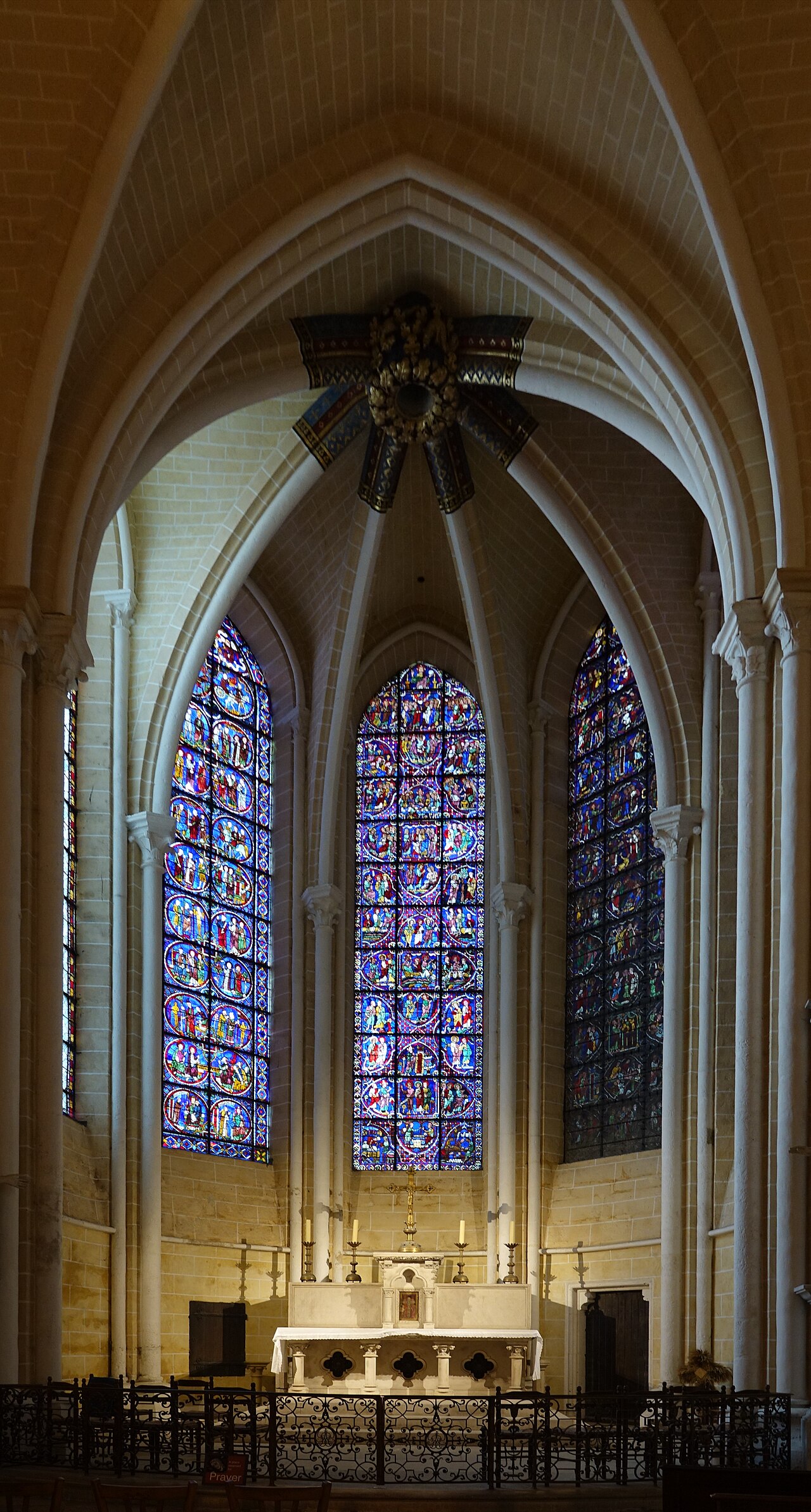
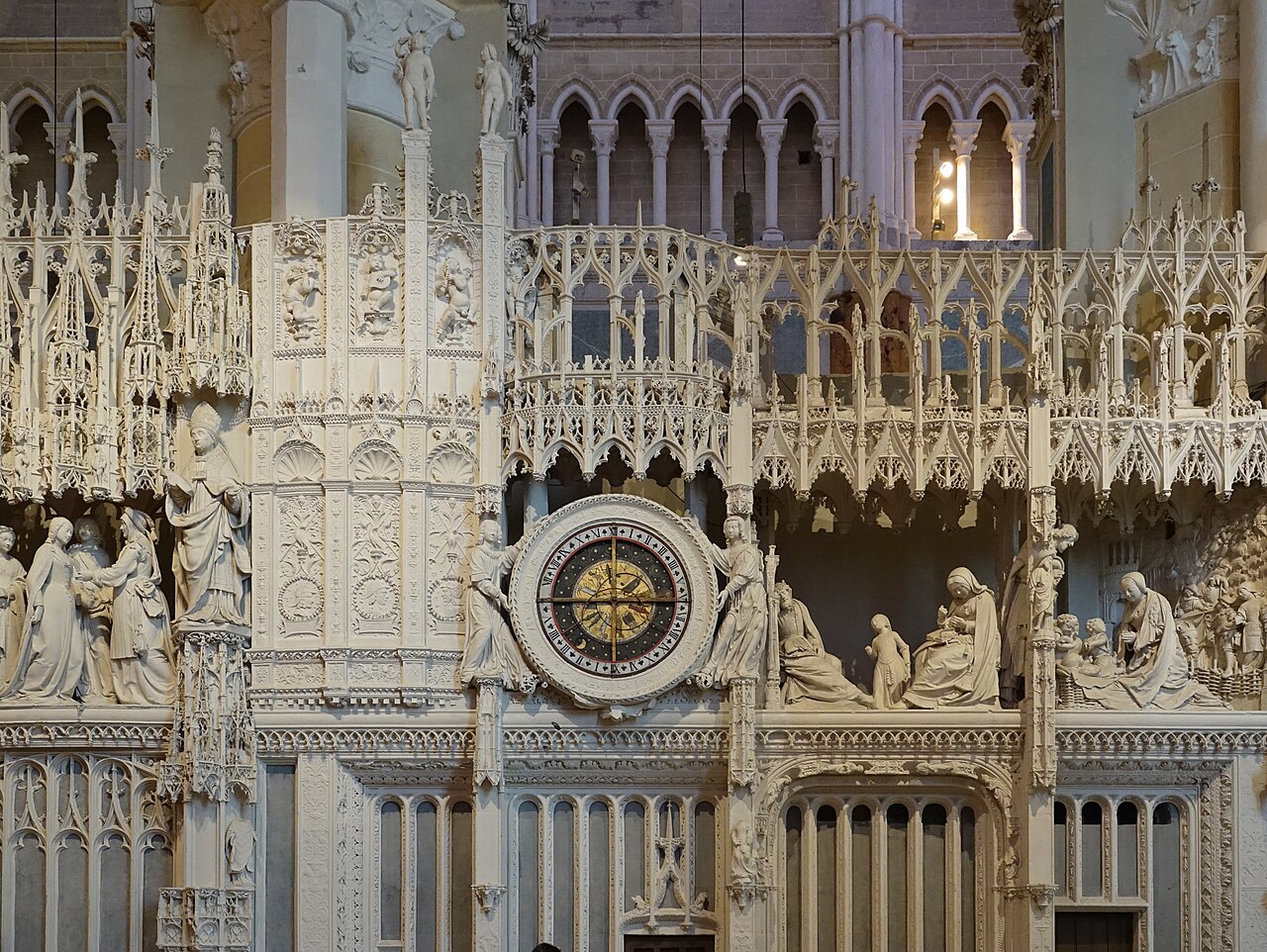
Chartres Cathedral stands as one of the most celebrated expressions of High and Classic Gothic architecture in Europe. Its exterior is defined by massive flying buttresses, a structural innovation that freed the walls to accommodate dramatically larger windows of coloured glass. The west façade presents a striking contrast between two spires: a 105-metre (349 ft) plain pyramidal form completed around 1160, and a taller 113-metre (377 ft) Flamboyant spire erected between 1507 and 1513 atop an older tower. The building rests on Romanesque basements from earlier centuries, creating a layered palimpsest of styles. Three great façades carry hundreds of sculpted figures that narrate theological themes and biblical stories. The Royal Portal on the west end, likely finished around 1140, remains the primary entrance. The majority of the original stained glass windows still survive intact, and the architecture has undergone only minor modifications since the early 13th century, making the structure an almost unbroken witness to medieval craftsmanship.
Pilgrimage, Relics, and Living Devotion
Since at least the 12th century, Chartres has drawn travellers from across Europe, not merely as a sight to be seen but as a site of deep religious significance. The cathedral houses the Sancta Camisa, a relic venerated as the tunic the Virgin Mary wore at the birth of Christ, and this treasure made the building a major pilgrimage destination well before the 1194 fire. A Black Madonna statue enshrined within the cathedral was solemnly crowned by Pope Pius IX on 31 May 1855, underscoring the enduring devotional life that continues to animate the space. The cathedral is dedicated to the Virgin Mary, and the cult of Our Lady permeates its sculpture, glass, and liturgical identity. Today, large numbers of Christian pilgrims still come to venerate the relics, while equally large numbers of secular visitors arrive to study its architecture and art. The coexistence of these two streams of visitors—faithful and curious—has been a defining feature of the cathedral's public life for nearly a millennium.
Preservation and Enduring Recognition
Chartres Cathedral has benefited from an unusual degree of physical continuity. The majority of its original stained glass windows survive intact, and the architectural fabric has seen only minor alterations since the early 13th century. This remarkable preservation means that visitors encounter a building that is, in large measure, the very structure that medieval masons and glaziers produced. The cathedral was designated a UNESCO World Heritage Site in 1979, with the organization describing it as 'the high point of French Gothic art' and a 'masterpiece,' and calling it one of the most beautiful and historically significant cathedrals in all of Europe. It serves as the seat of the Bishop of Chartres and sits roughly 80 kilometres (50 miles) southwest of Paris. The building layers multiple eras: Romanesque barrel- and groin-vaulted chapels in the crypt, including the surviving Saint Lubin Chapel beneath the apse; the High Gothic body completed by 1220; and the Flamboyant north spire of 1507–1513. This stratification makes the cathedral a living document of nearly a thousand years of continuous sacred building.
Common Misconceptions (Editorial)
- A common misconception is that Chartres Cathedral was built on a site with no previous religious structures. In fact, it stands on the site of at least five earlier cathedrals, with the first church dating no later than the 4th century. - Another misconception is that the cathedral’s two spires are from the same original construction period. The south spire dates from the main 1194–1220 construction, while the north spire was rebuilt in the Flamboyant style from 1507 to 1513 after lightning destroyed the earlier one in 1506. - Some may assume that French kings were always crowned at Reims Cathedral, but on 27 February 1594, King Henri IV of France was crowned in Chartres Cathedral.
Why It Matters (Editorial)
Chartres Cathedral endures as a pinnacle of High Gothic architecture and a testament to medieval communal effort, having been rebuilt swiftly after a devastating fire through funding from patrons across Europe. Its survival through revolutions, iconoclasm, and war—including the preservation of its famed stained glass and the Sancta Camisa relic—makes it a living archive of faith, art, and resilience that continues to inspire visitors and scholars alike.
Gallery
Frequently Asked Questions
Who is Chartres Cathedral?
Chartres Cathedral, formally called Notre-Dame de Chartres, is a Catholic church sitting in the town of Chartres, roughly 80 kilometers southwest of Paris. It functions as the episcopal seat for the Bishop of Chartres and is devoted to the Virgin Mary.
What are Chartres Cathedral's powers/role?
Its claim to fame is standing as one of the finest surviving examples of High Gothic architecture, with a north spire reaching 113 meters and a south spire at 105 meters. The building is celebrated for its structural innovation, luminous stained glass, and sculptural programs that defined the Classic Gothic style.
How does Chartres Cathedral's story end?
It doesn't end—Chartres still stands and remains an active place of worship today. In 1979 UNESCO inscribed it as a World Heritage Site, cementing its place as a protected landmark of universal significance.
Why is Chartres Cathedral important?
The current structure, raised between 1194 and 1220, replaced at least five earlier buildings on the same plot going back to the 4th century, making it a continuous thread of Christian worship. Its architectural achievements set benchmarks for Gothic construction that influenced cathedrals across Europe for centuries.
When was Chartres Cathedral built?
The main body of the present cathedral was constructed between 1194 and 1220, following a devastating fire that destroyed much of its predecessor. The Flamboyant-style north spire was added later, in the 16th century.
More in Great Cathedrals 1-20
Spotted an error? Know more?
This is a living reference — every entry is fact-audited, and reader corrections feed straight into our audit queue. Suggest an edit · See this site's audit record