Saint Basil's Cathedral
Russian Orthodox cathedral on Red Square, built by Ivan the Terrible.

via Wikipedia: Saint Basil's Cathedral · see source
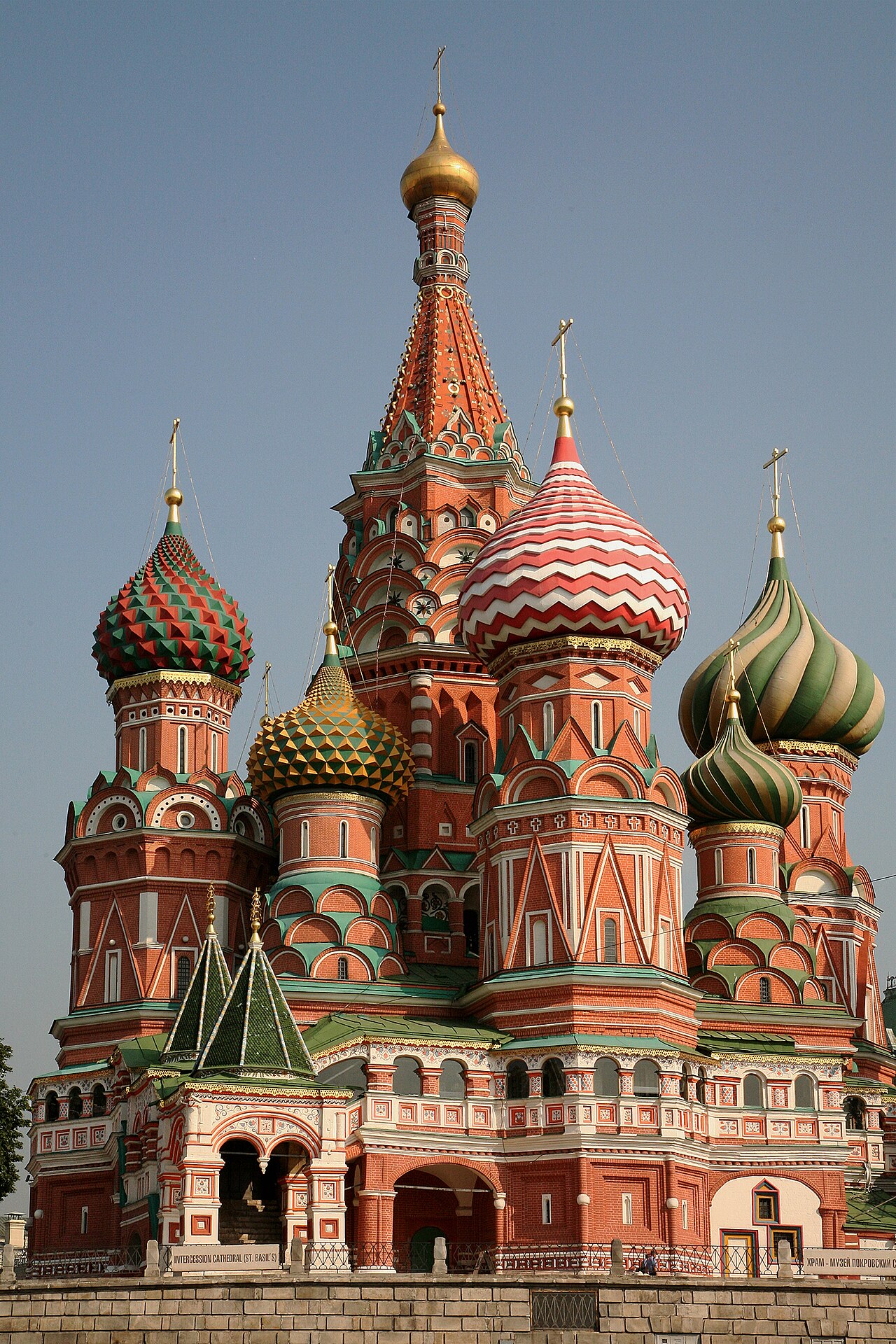
The Cathedral of Vasily the Blessed, commonly known as Saint Basil's Cathedral, is a Russian Orthodox church on Red Square in the historic centre of Moscow. It is one of the most popular cultural symbols of Russia. The building, now a museum, is officially known as the Cathedral of the Intercession of the Most Holy Theotokos on the Moat, or Pokrovsky Cathedral. It was built from 1555 to 1561 on orders from Ivan the Terrible and commemorates the capture of Kazan and Astrakhan. It was completed, with its colours, in 1683.
- built
- 1555–1561
- location
- Red Square, Moscow
- type
- Russian Orthodox church (now museum)
- architect
- Unknown; tradition names Barma and Postnik Yakovlev (possibly the same person)
- known_for
- Nine distinctive onion domes; symbol of Russia; UNESCO World Heritage Site since
- current_status
- Federal property of the Russian Federation; division of the State Historical Mus
Verified Timeline
Lore & Background
The site originally held a wooden Trinity Church, around which Ivan IV erected seven wooden memorial churches after victories in the Russo-Kazan War. In autumn 1554, Ivan ordered a wooden Church of Intercession on the same site, 'on the moat.' One year later, he ordered a new stone cathedral to commemorate his campaigns. The identity of the architect is unknown; tradition holds that two architects, Barma and Postnik, built it, though researchers suggest both names refer to the same person, Postnik Yakovlev. A legend that Ivan blinded the architect is considered a myth, as the architect later participated in the construction of the Cathedral of the Annunciation in Moscow and the walls and towers of the Kazan Kremlin. The original building, known as Trinity Church and later Trinity Cathedral, contained eight chapels arranged around a ninth, central chapel dedicated to the Intercession. A tenth chapel was erected in 1588 over the grave of the venerated local saint Vasily (Basil). In the 16th and 17th centuries, it was perceived as the earthly symbol of the Heavenly City and served as an allegory of the Jerusalem Temple in the annual Palm Sunday parade attended by the patriarch of Moscow and the tsar of all Russia. The cathedral has nine distinctive onion domes and is shaped like the flame of a bonfire rising into the sky. As part of the Soviet Union's antireligious campaigns, the church was confiscated from the Russian Orthodox community and has operated as a division of the State Historical Museum since 1928. It was completely secularized in 1929 and remains federal property of the Russian Federation. Weekly liturgical celebration and prayers to St. Basil were restored in 1997, following the dissolution of the Soviet Union in 1991.
Reader's Guide
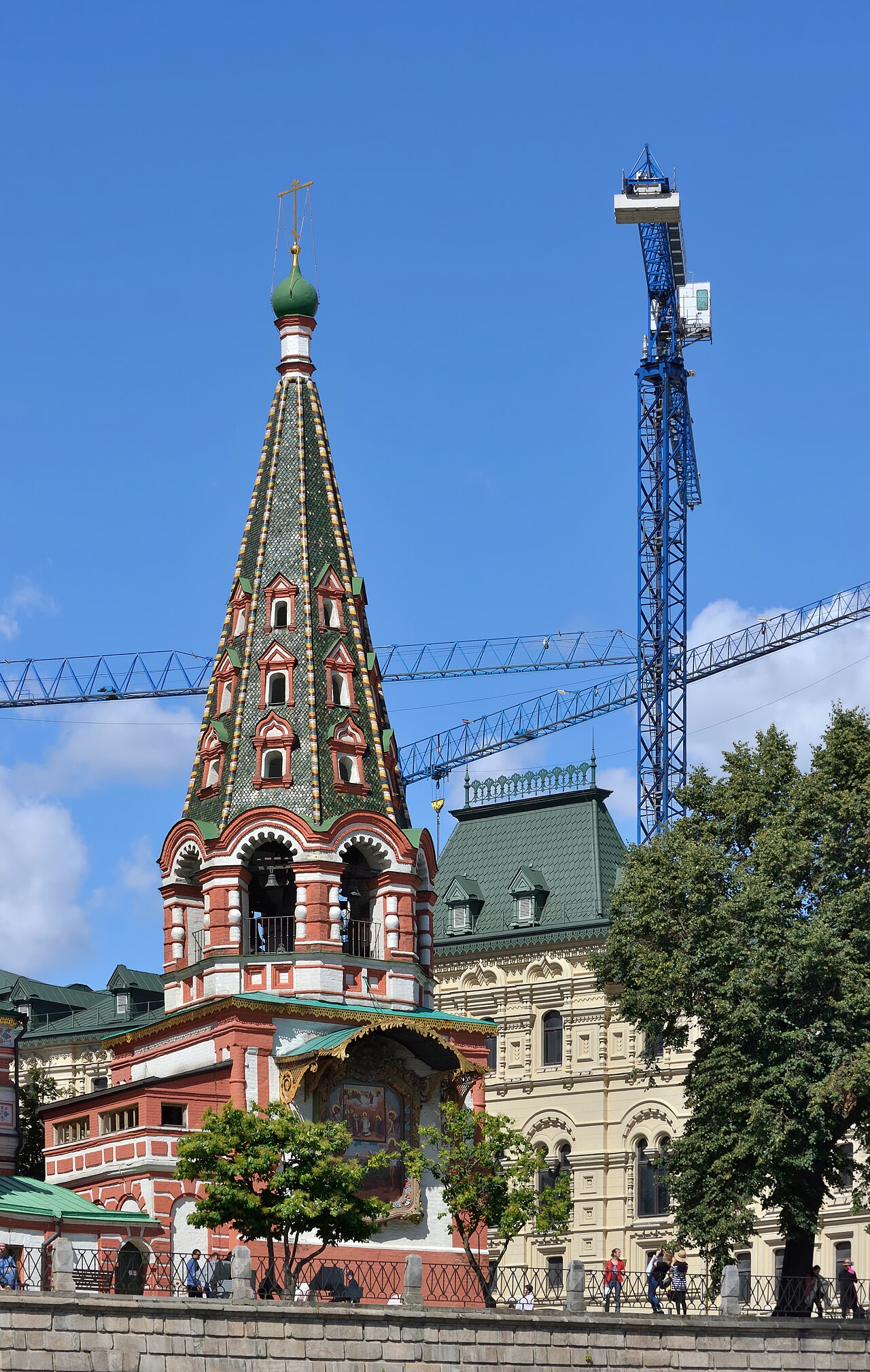
Saint Basil's Cathedral is a landmark of Russian architecture and a symbol of Moscow. Built by order of Ivan the Terrible to commemorate the capture of Kazan and Astrakhan, it represents a break from Byzantine tradition, as noted by historian Dmitry Shvidkovsky, who called it 'like no other Russian building' and noted that 'nothing similar can be found in the entire millennium of Byzantine tradition from the fifth to the fifteenth century.' Its nine onion domes and flame-like shape foreshadowed the climax of Russian national architecture in the 17th century and are considered a prime example of Russian Renaissance architecture. The cathedral's location outside the Kremlin walls was a political statement in favour of posad commoners. Its history includes multiple expansions and renovations, notably in 1680–1683, when the formerly open arcades were filled with brick walls and a belltower was added. The cathedral survived the Fire of Moscow in 1812 and was used as a stable by French troops. Since 1928 it has been a museum, and in 1990 it became part of the Moscow Kremlin and Red Square UNESCO World Heritage Site. Its significance lies in its unique design, its role as a cultural symbol, and its survival through political and religious changes.
Did You Know?
- The cathedral was completed with its colours in 1683, over a century after construction began in 1555.
- The original building was known as Trinity Church and later Trinity Cathedral, containing eight chapels around a ninth central chapel.
- A tenth chapel was erected in 1588 over the grave of the venerated local saint Vasily (Basil).
- The cathedral was used as a stable by French troops occupying Moscow in 1812 and was spared by the Fire of Moscow that razed Kitai-gorod.
- Weekly liturgical celebration and prayers to St. Basil were restored in 1997, after the dissolution of the Soviet Union in 1991.
Commission and Political Ambition
The site where this cathedral now stands was once a bustling marketplace between the Kremlin's St. Frol's (later Saviour's) Gate and the outlying posad. Ivan the Terrible marked each military triumph of the Russo-Kazan War by erecting a wooden memorial church next to the walls of Trinity Church, until by the end of his Astrakhan campaign it was shrouded within a cluster of seven wooden churches. In autumn of 1554, according to Nikon's Chronicle, Ivan ordered the construction of the wooden Church of Intercession on the same site, 'on the moat.' One year later, Ivan ordered a new stone cathedral on the site of Trinity Church to commemorate his campaigns. Dedication of a church to a military victory was 'a major innovation' for Muscovy. Placing the church outside the Kremlin walls was a political statement in favour of posad commoners and against hereditary boyars. The identity of the architect is unknown; tradition held that the church was built by two architects, Barma and Postnik, though researchers propose that both names refer to the same person, Postnik Yakovlev. The legend that Ivan blinded the architect is likely a myth, as Postnik Yakovlev remained active at least throughout the 1560s, working on the Cathedral of the Annunciation in Moscow and the walls and towers of the Kazan Kremlin. There is evidence that construction involved stonemasons from Pskov and German lands.
Architectural Singularity
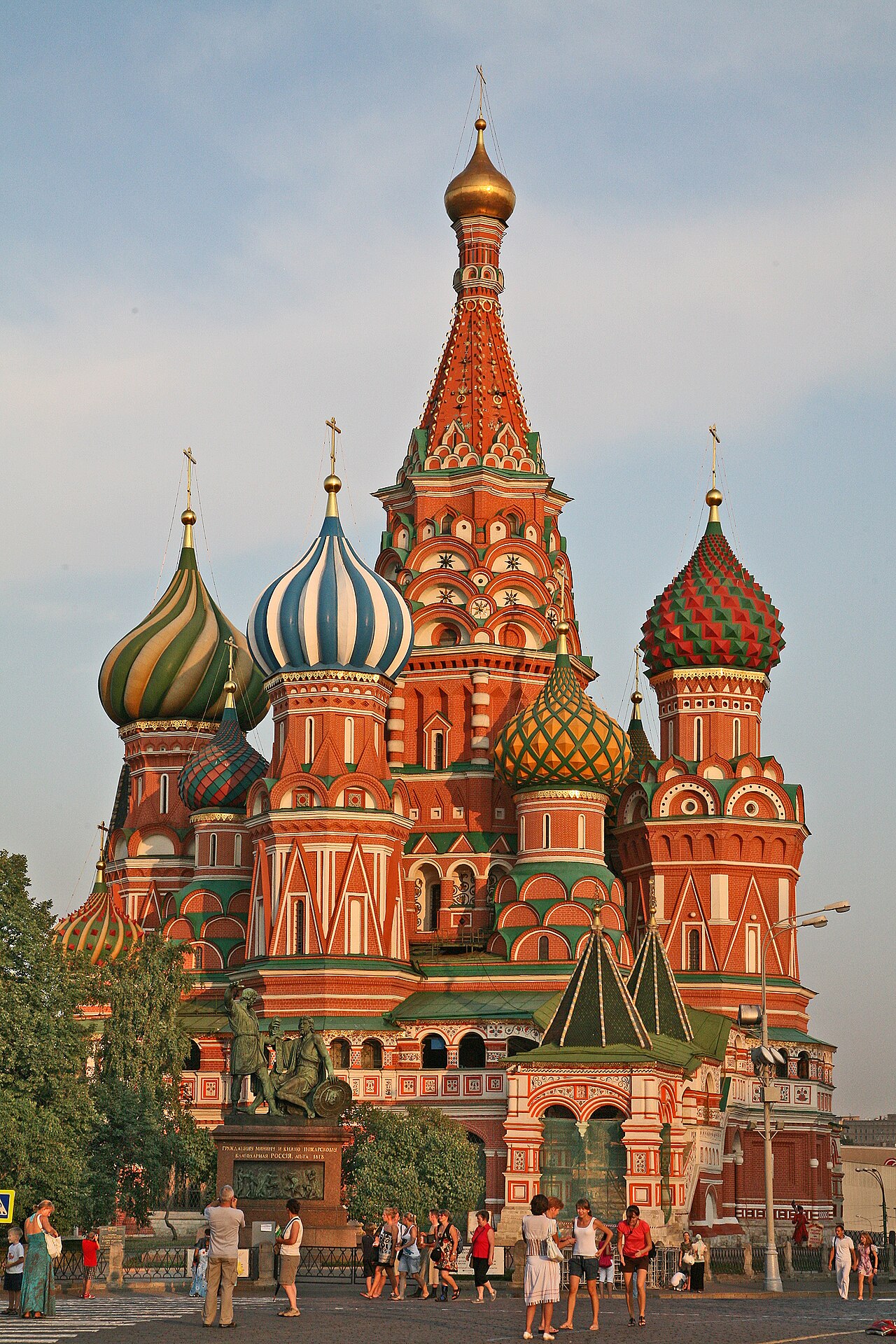
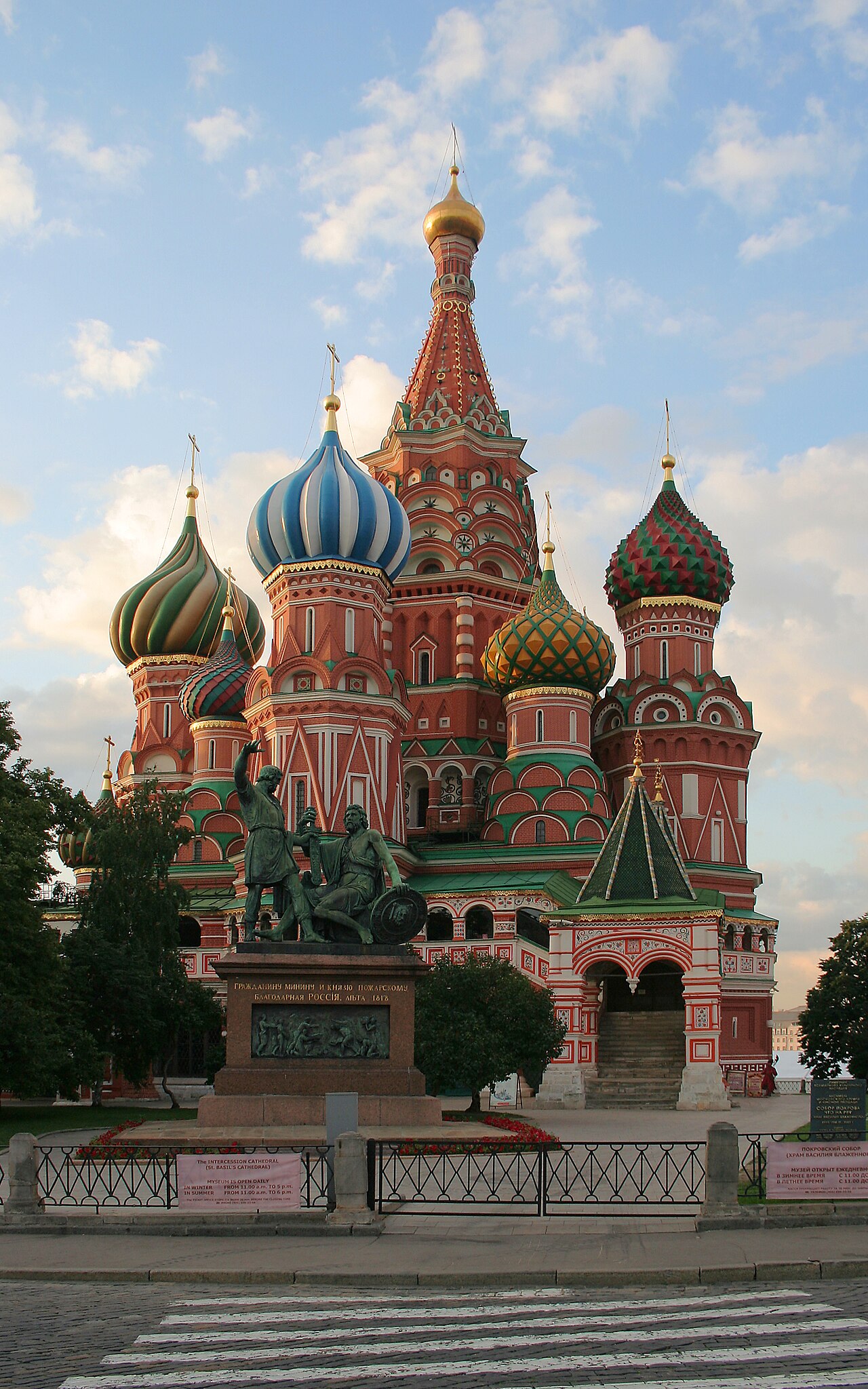
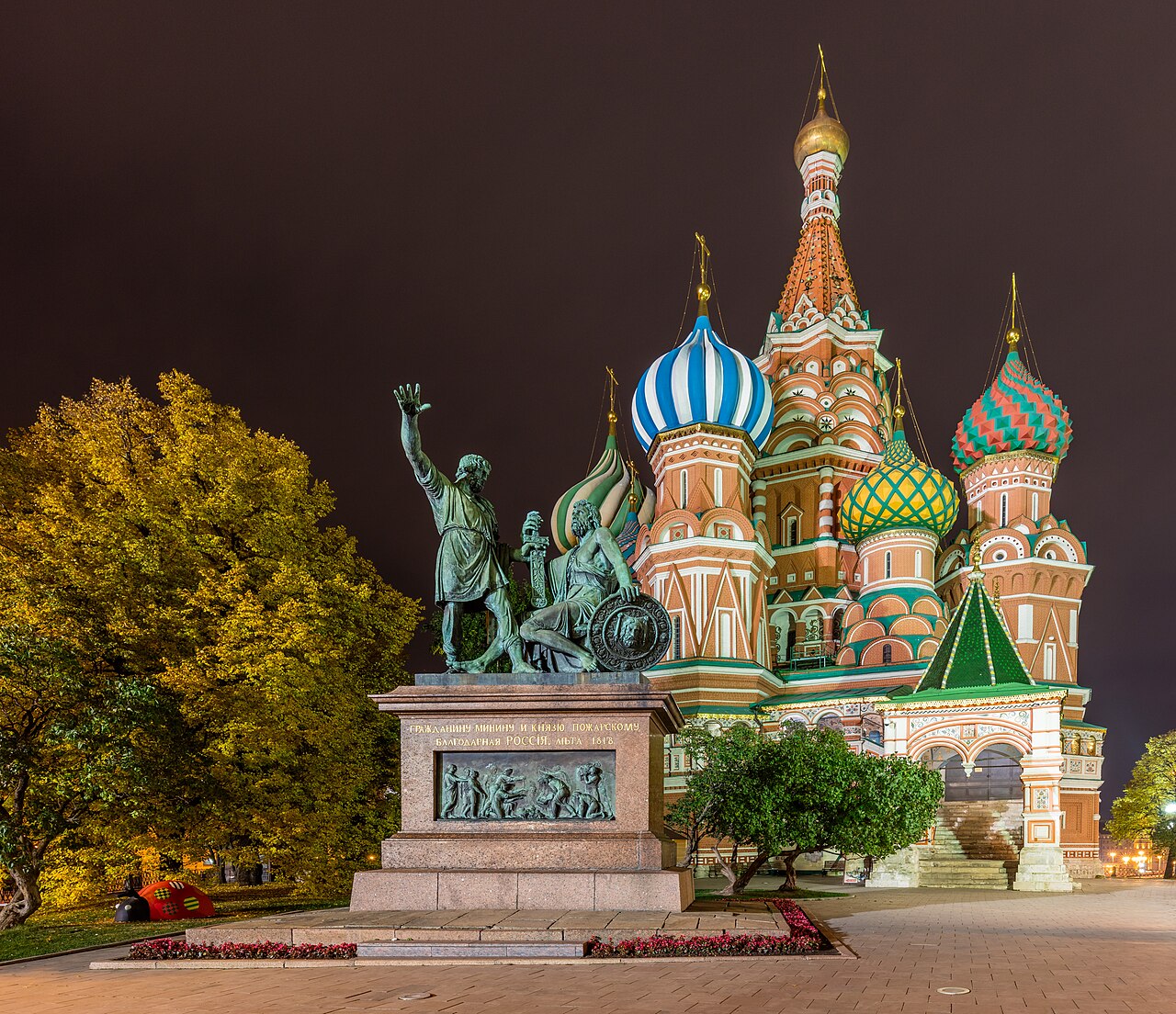
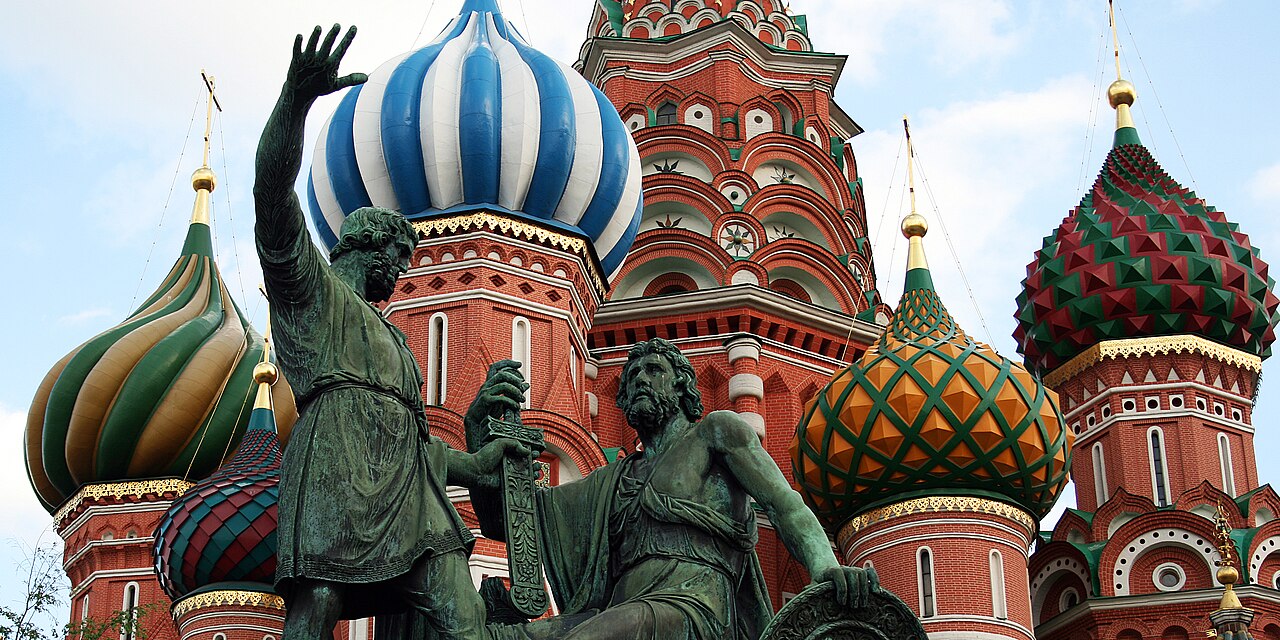
Russian historian Dmitry Shvidkovsky, in his book Russian Architecture and the West, states that 'it is like no other Russian building. Nothing similar can be found in the entire millennium of Byzantine tradition from the fifth to the fifteenth century [...] a strangeness that astonishes by its unexpectedness, complexity and dazzling interleaving of the manifold details of its design.' The cathedral presents nine distinctive onion domes, each corresponding to a different church, and its overall silhouette is shaped like the flame of a bonfire rising into the sky. Originally conceived as eight chapels arranged around a ninth central sanctuary dedicated to the Intercession, the structure later gained a tenth chapel in 1588 over the grave of the venerated local saint Vasily (Basil). The vault of the Saint Basil Sanctuary serves as a reference point in evaluating the quality of Muscovite stonemasonry and engineering. The building is considered a prime example of Russian Renaissance architecture and is seen as foreshadowing the climax of Russian national architecture in the 17th century. Its construction involved stonemasons from Pskov and German lands. The final coloration was completed in 1683, nearly a century after construction began in 1555.
Sacred Symbolism and Liturgical Life
In the 16th and 17th centuries, the cathedral was perceived as the earthly symbol of the Heavenly City. Like all churches in Byzantine Christianity, it was popularly known as the 'Jerusalem' and served as an allegory of the Jerusalem Temple in the annual Palm Sunday parade attended by the patriarch of Moscow and the tsar of all Russia. The original structure, initially known as Trinity Church and later Trinity Cathedral, contained eight chapels arranged around a ninth central chapel dedicated to the Intercession. A tenth chapel was added in 1588 over the grave of the venerated local saint Vasily (Basil), who lived from the 1460s to 1552. Another local fool, Ivan the Blessed, was buried on the church grounds in 1589, and a sanctuary in his memory was established in 1672 inside the south-eastern arcade. The dedication to a military victory represented a major innovation for Muscovy. The building was constructed from 1555 to 1561 on orders from Ivan the Terrible to commemorate the capture of Kazan and Astrakhan.
Secularization and Modern Identity
Under the Soviet program of state atheism, the cathedral was confiscated from the Russian Orthodox community as part of the antireligious campaigns. It has operated as a division of the State Historical Museum since 1928 and was completely secularized in 1929, remaining a federal property of the Russian Federation to this day. The building now functions as a museum, though it retains its official name as the Cathedral of the Intercession of the Most Holy Theotokos on the Moat, or Pokrovsky Cathedral. In 1990, it became part of the Moscow Kremlin and Red Square UNESCO World Heritage Site. Following the dissolution of the Soviet Union in 1991, weekly liturgical celebration and prayers to St. Basil have been restored since 1997. The cathedral remains one of the most popular cultural symbols of Russia, its colorful domes—completed with their final coloration in 1683—serving as an instantly recognizable emblem of the nation. Located on Red Square in the historic centre of Moscow, it continues to draw visitors from around the globe.
Common Misconceptions (Editorial)
1. While a popular legend claims Ivan the Terrible blinded the cathedral’s architect so he could never create anything more beautiful, this is a myth; the architect later worked on the Cathedral of the Annunciation in Moscow and the walls and towers of the Kazan Kremlin. 2. The cathedral’s bright, multicolored exterior was not the original design—it was completed with its colors in 1683, more than a century after construction began in 1555.
Why It Matters (Editorial)
Saint Basil’s Cathedral endures not only as a breathtaking architectural marvel but as a layered symbol of Russian identity, having survived war, fire, and Soviet secularization to remain a fixture of Moscow’s Red Square. Its resilience—from a wooden church complex commemorating military victories to a museum that only recently restored weekly liturgical prayers—reflects the nation’s complex relationship with faith, history, and cultural memory.
Gallery
Frequently Asked Questions
What is Saint Basil's Cathedral?
It is a Russian Orthodox church located on Red Square in the historic heart of Moscow. Its full official title is the Cathedral of the Intercession of the Most Holy Theotokos on the Moat, but virtually everyone refers to it simply as Saint Basil's.
What is Saint Basil's Cathedral famous for?
The building is instantly recognizable by its nine vividly colored onion-shaped domes, which make it one of the most iconic visual symbols of Russia. Ivan the Terrible ordered its construction between 1555 and 1561 to mark the military victories over Kazan and Astrakhan.
Who designed Saint Basil's Cathedral?
No single architect can be definitively confirmed as the builder. Traditional accounts credit two names—Barma and Postnik Yakovlev—though some historians suspect those two figures may actually be the same person.
What is the current status of Saint Basil's Cathedral?
The cathedral no longer functions as an active place of worship; it has served as a museum since 1928 as part of the State Historical Museum. It is held as a federal property of the Russian Federation and has held UNESCO World Heritage Site status since 1990.
Why is Saint Basil's Cathedral important to Russia?
It stands as one of the country's most recognizable architectural landmarks and a defining image of Russian cultural identity. Its striking silhouette on Red Square draws millions of visitors and anchors the historic center of Moscow as a major tourist and heritage destination.
More in Great Cathedrals 1-20
Spotted an error? Know more?
This is a living reference — every entry is fact-audited, and reader corrections feed straight into our audit queue. Suggest an edit · See this site's audit record