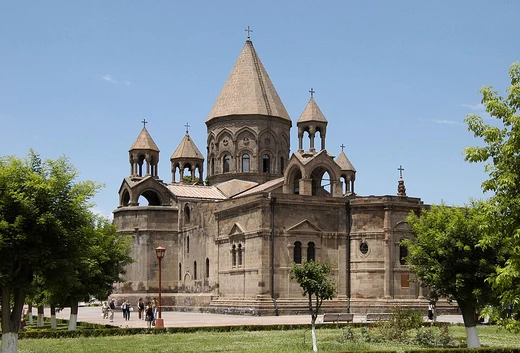
St. Paul's Cathedral
Cathedral on Ludgate Hill, destroyed in the Great Fire of 1666.

via Wikipedia: Old St Paul's Cathedral · see source
Old St Paul's Cathedral was the cathedral of the City of London that, until the Great Fire of 1666, stood on the site of the present St Paul's Cathedral. Built in 1087 and from 1255 to 1314, it was dedicated to Paul the Apostle. The building was perhaps the fourth such St Paul's cathedral church at this site on Ludgate Hill, going back to the 7th century. Work on the cathedral began after a fire in 1087, which destroyed the previous church. Work took more than 200 years, and over that time the architecture of the church changed from Norman Romanesque to early English Gothic. The church was consecrated in 1240, enlarged in 1256 and again in the early 14th century. At its completion in the mid-14th century, the cathedral was one of the longest churches in the world, had one of the tallest spires and some of the finest stained glass.
- location
- Ludgate Hill, City of London, England
Lore & Background
The continuing presence of the shrine of the 7th century bishop Saint Erkenwald made the cathedral a site of pilgrimage in the Middle Ages. In addition to serving as the seat of the Diocese of London, the building developed a reputation as a social hub, with the nave aisle, 'Paul's walk,' known as a business centre and a place to hear the news and gossip on the London grapevine. During the Reformation, the open-air pulpit in the churchyard, St Paul's Cross, became the place for radical evangelical preaching and Protestant bookselling. The cathedral was in structural decline by the early 17th century. The spire was destroyed by fire in 1561 and not replaced. Restoration work begun by Inigo Jones in the 1620s was temporarily halted during the English Civil War (1642–1651). In 1666, further restoration was in progress under Sir Christopher Wren when the cathedral was devastated in the Great Fire of London. At that point, it was demolished, and the present cathedral was built on the site.
Reader's Guide
Old St Paul's Cathedral was perhaps the fourth church at Ludgate Hill dedicated to St Paul. A devastating fire in 1087, detailed in the Anglo-Saxon Chronicle, destroyed much of the cathedral. King William I donated the stone from the destroyed Palatine Tower on the River Fleet towards the construction of a Romanesque Norman cathedral, an act sometimes said to be his last before death. Bishop Maurice oversaw preparations, although it was primarily under his successor, Richard de Beaumis, that construction work fully commenced. Beaumis was assisted by King Henry I, who gave the bishop stone and asked that all material brought up the River Fleet for the cathedral should be free from toll. To fund the cathedral, Henry I gave Beaumis rights to all fish caught within the cathedral neighbourhood and tithes on venison taken in the County of Essex. Beaumis also gave a site for the original foundation of St Paul's School. Henry I's death was followed by a period of unrest and civil war known as 'The Anarchy'. Henry of Blois, Bishop of Winchester, was appointed to administer the affairs of St Paul's. Almost immediately, he had to deal with the aftermath of a fire at London Bridge in 1135. It spread over much of the city, damaging the cathedral and delaying its construction. During this period, the architectural style was changed from heavy Romanesque to Early English Gothic. Although the base Norman columns were left alone, lancet pointed arches were placed over them in the triforium and some heavy columns were substituted with clustered pillars. The steeple was erected in 1221 and the cathedral was rededicated by Bishop Roger Niger in 1240. This steeple was reputedly measured at 520 feet (158 m) high in 1312.
Did You Know?
- The spire was destroyed by fire in 1561 and never replaced.
- Robert Hooke used a plumb-line in 1664 to calculate the tower's height as 'two hundred and four feet very near'.
- The octagonal chapter house, built about 1332 by William de Ramsey, is considered the earliest example of Perpendicular Gothic.
- The cathedral's nave aisle was known as 'Paul's walk' and served as a business centre and gossip hub.
- King William I donated stone from the destroyed Palatine Tower on the River Fleet for the cathedral's construction.
A Century and a Half in the Making
The construction of Old St Paul's Cathedral unfolded over more than two centuries, a marathon of building that outlasted multiple monarchs and bishops. After a devastating fire in 1087 wiped out the previous church—an event recorded in the Anglo-Saxon Chronicle—King William I reportedly donated stone from the ruined Palatine Tower on the River Fleet to fund a new Romanesque structure, an act sometimes described as his final royal gesture before his death. Bishop Maurice began preparations, but it was his successor Richard de Beaumis who saw full-scale construction take off, aided by King Henry I, who granted toll-free access to materials arriving up the River Fleet and endowed the project with fishing rights and venison tithes from Essex. The project was not without interruption: a fire at London Bridge in 1135 damaged the half-finished cathedral and stalled progress. By the time the steeple rose in 1221 and Bishop Roger Niger rededicated the church in 1240, the architectural language had shifted decisively from heavy Norman Romanesque to the lighter pointed arches of Early English Gothic, with clustered pillars replacing some of the original massive columns.
The Longest Nave and the Tallest Spire
By the mid-fourteenth century, Old St Paul's had grown into one of the most ambitious churches in Christendom. Excavations carried out in 1878 by Francis Penrose confirmed that the enlarged structure stretched 586 feet in length and 100 feet in width, with the transepts and crossing spanning 290 feet. Its spire, traditionally cited at 489 feet, was said to be surpassed in height only by Lincoln Cathedral's, though Christopher Wren, acting as King's Surveyor, considered that figure an overestimate and settled on 460 feet. The interior, with its Norman triforium, vaulted ceiling, and some of the finest stained glass of its era, earned the cathedral a reputation that, as Canon William Benham observed in 1902, had no rival in England and perhaps none in all of Europe. The octagonal chapter house, built around 1332 by William de Ramsey, is regarded by architectural historians as the earliest known example of the Perpendicular Gothic style.
A Living Hub of London Life
Beyond its sacred function as the seat of the Diocese of London, Old St Paul's evolved into a vital social and commercial artery for the city. The nave aisle, affectionately called 'Paul's walk,' served as an informal business centre where merchants conducted deals and Londoners gathered to exchange news and gossip along the city's grapevine. The cathedral's spiritual magnetism was amplified by the continuing presence of the shrine of Saint Erkenwald, a seventh-century bishop whose relics drew pilgrims throughout the Middle Ages. During the Reformation, the open-air pulpit in the churchyard—St Paul's Cross—became a focal point for radical evangelical preaching and Protestant bookselling, transforming the cathedral precinct into a stage for religious upheaval. Even the cathedral's physical expansion reshaped local parishes: when the east end was lengthened in the 'New Work' of 1255 to 1314, the parish church of St Faith was absorbed into the cathedral, and its dispossessed congregation was granted the east end of the west crypt along with a detached bell tower that had historically summoned citizens to the Cheapside Folkmote.
Decline, War, and the Fire
By the early seventeenth century, Old St Paul's was showing the wear of centuries. Its spire, lost to fire in 1561, was never rebuilt, leaving the silhouette incomplete. In the 1620s, the architect Inigo Jones undertook restoration work, but the English Civil War of 1642 to 1651 forced a temporary halt to all efforts. When work resumed under Sir Christopher Wren in the 1660s, the cathedral was still in a state of partial repair. Then, in 1666, the Great Fire of London swept through the city and devastated the ancient building. The cathedral was demolished, and the site on Ludgate Hill was cleared for what would become the present St Paul's Cathedral. The loss was not merely structural; it erased a structure that had stood in some form on that hill since the seventh century, a continuous thread of worship spanning nearly a millennium. The fire also ended the parish arrangements that had persisted since the medieval period, as St Faith's congregation was eventually merged with St Augustine Watling Street.
Common Misconceptions (Editorial)
One common misconception is that St. Paul's Cathedral has always been the same building that stands today. In reality, the present cathedral was built only after the Great Fire of 1666, and the earlier structure—Old St Paul's Cathedral—was one of the longest churches in the world with one of the tallest spires. Another misconception is that the cathedral's spire was lost during the Great Fire; in fact, the spire was destroyed by fire in 1561 and was never replaced.
Why It Matters (Editorial)
Old St Paul's Cathedral matters not only as the spiritual seat of the Diocese of London but as a living chronicle of the city's resilience across centuries of fire, war, and reformation. Its evolution from a medieval pilgrimage site to a hub of commerce and gossip reflects how the physical and social fabric of London have always been intertwined, reminding us that cathedrals are as much about community as they are about faith.
Gallery

Frequently Asked Questions
What is St. Paul's Cathedral?
St. Paul's Cathedral is an Anglican cathedral located on Ludgate Hill in the City of London. It has been dedicated to Paul the Apostle since the original church was first established on that site in AD 604.
Who designed St. Paul's Cathedral and in what style?
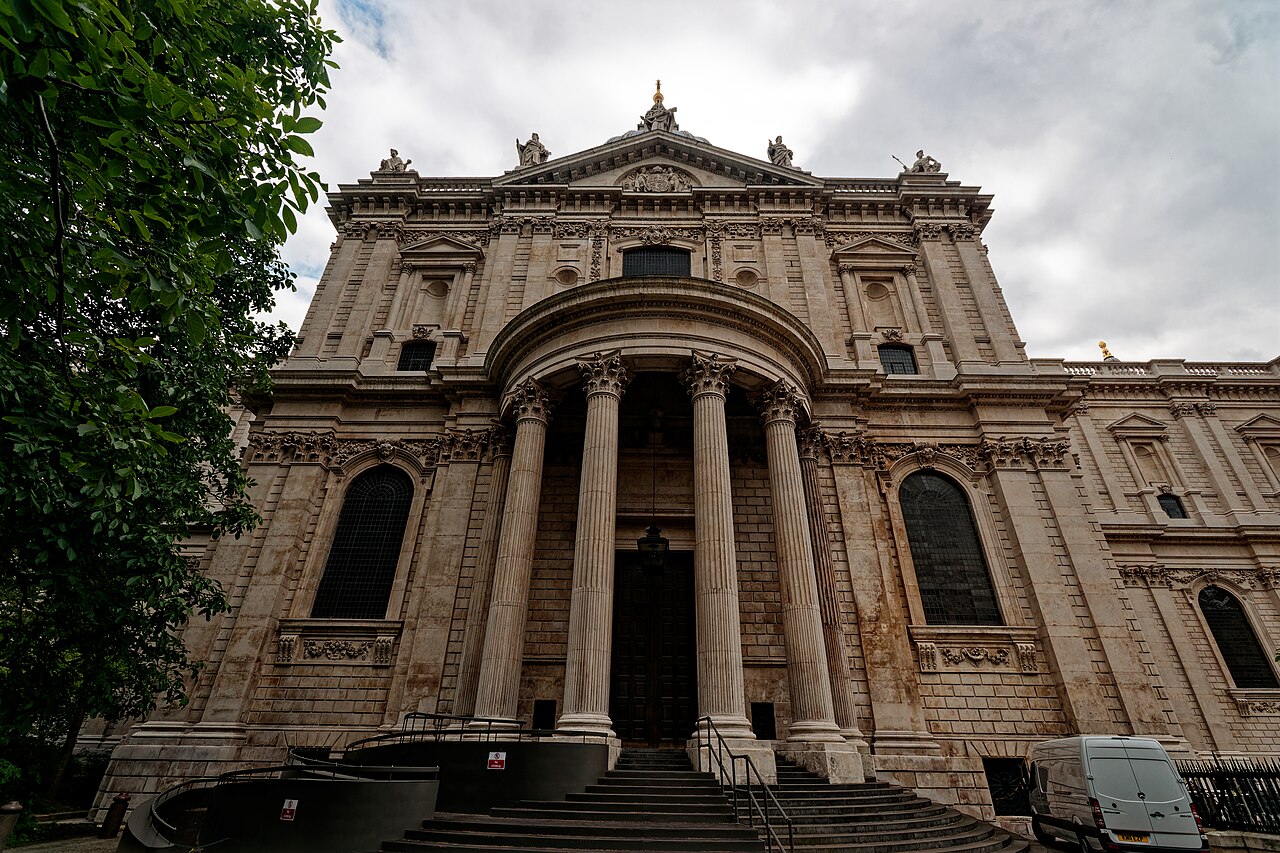
Sir Christopher Wren designed the present building in the English Baroque style. His work was part of a large-scale rebuilding programme launched after the Great Fire of London destroyed the earlier Gothic cathedral.
When was St. Paul's Cathedral completed?
The current structure was finished in 1710, roughly a century after the fire that necessitated its reconstruction. It stands 365 feet (111 metres) tall, making it one of London's most recognizable silhouettes.
What is St. Paul's Cathedral's role in the Church of England?
It serves as the seat of the Bishop of London and is the mother church of the Diocese of London. As an Anglican cathedral, it operates under the Church of England's denomination.
Why is St. Paul's Cathedral often associated with the Great Fire of London?
The fire of 1666 largely destroyed the medieval Gothic cathedral that previously occupied the site. Wren's Baroque replacement was the centrepiece of the city's post-fire rebuilding effort, giving the cathedral a defining place in London's history.
More in Great Cathedrals 1-20
Spotted an error? Know more?
This is a living reference — every entry is fact-audited, and reader corrections feed straight into our audit queue. Suggest an edit · See this site's audit record