Milan Cathedral
Largest church in Italy, built over nearly six centuries.

via Wikipedia: Milan Cathedral · see source
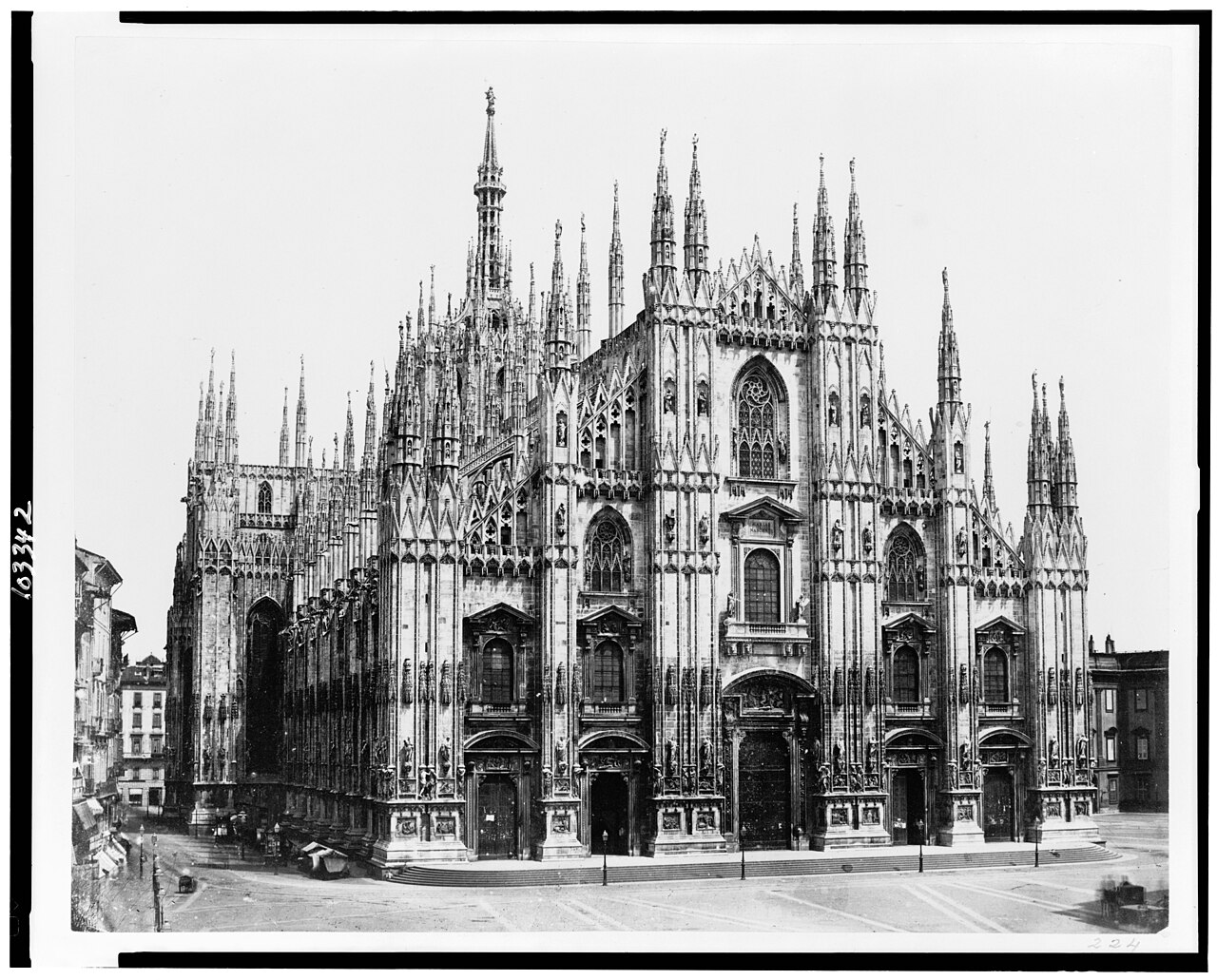
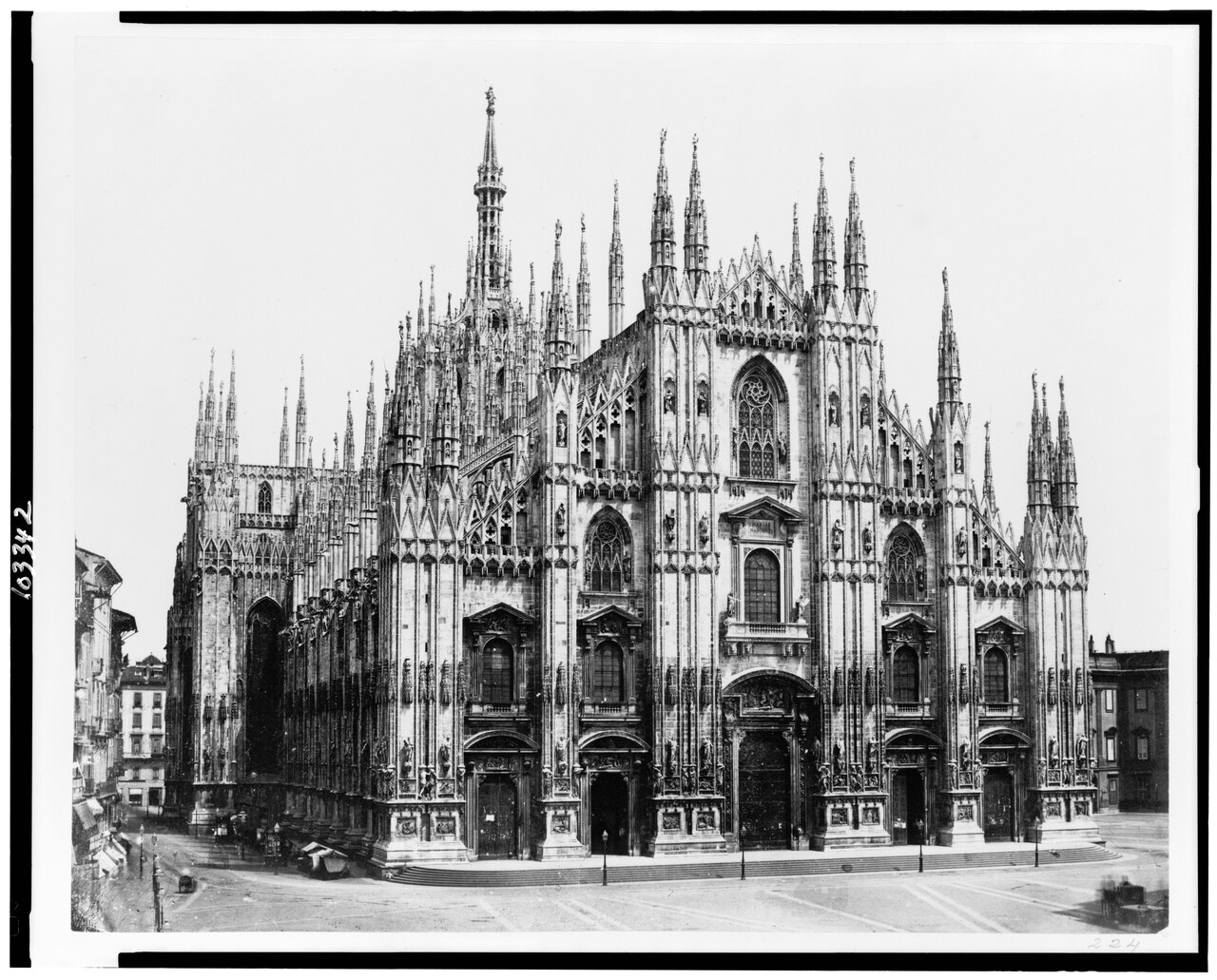
Milan Cathedral (Italian: Duomo di Milano), officially the Metropolitan Cathedral-Basilica of the Nativity of Saint Mary, is the cathedral church of Milan, Lombardy, Italy. Dedicated to the Nativity of St. Mary, it is the seat of the Archbishop of Milan, currently Archbishop Mario Delpini. Construction began in 1386 and was completed in 1965, taking nearly six centuries. It is the largest church in the Italian Republic and one of the largest in the world.
- location
- Milan, Lombardy, Italy
- dedication
- Nativity of St. Mary (Santa Maria Nascente)
- construction_start
- 1386
- construction_end
- 1965
- height_of_Madonnina_spire
- 108.5 m
- current_archbishop
- Mario Delpini
Lore & Background
The cathedral occupies the most central site of Roman Mediolanum, where a public basilica once faced the forum. The first cathedral, dedicated to St. Thecla, was completed by 355. An adjoining basilica was erected in 836, and an old octagonal baptistery dates to 335. After a fire in 1075 damaged the cathedral and basilica, they were rebuilt as the Duomo. In 1386, Archbishop Antonio da Saluzzo began construction, coinciding with the rise of his cousin Gian Galeazzo Visconti. The project was meant as a reward to the populace and to emphasize Milan's centrality, as Visconti resided in Pavia. Three main buildings were demolished, and the old church of Sta. Maria Maggiore was used as a stone quarry. The Fabbrica del Duomo, with 300 employees, oversaw the work, initially under chief engineer Simone da Orsenigo, who planned a brick Lombard Gothic structure. In 1389, French engineer Nicolas de Bonaventure added Rayonnant Gothic elements. Later, Jean Mignot was called from Paris and declared the work done so far in 'peril of ruin' and done 'without science,' though his forecasts proved untrue. Construction stalled from 1402 to 1480 for lack of money and ideas. In 1488, Leonardo da Vinci and Donato Bramante submitted models for the central cupola; Leonardo later withdrew. The octagonal cupola was completed from 1500 to 1510 under Ludovico Sforza. The façade remained largely incomplete for centuries, with designs by Pellegrino Pellegrini (1571), Carlo Buzzi (1649), Filippo Juvarra (1733), and Luigi Vanvitelli (1745) never carried out. The Madonnina's spire was erected in 1762. In 1805, Napoleon Bonaparte ordered the façade finished, with expenses promised by the French treasurer, though reimbursement was never paid.
Reader's Guide
Milan Cathedral stands as a monumental achievement of Gothic architecture and civic ambition, built over nearly six centuries from 1386 to 1965. It is the largest church in Italy, surpassing all others within the Italian Republic, and one of the largest in the world. Its construction involved multiple architects and engineers, including French experts who introduced Rayonnant Gothic elements, and later Renaissance figures like Leonardo da Vinci and Donato Bramante. The cathedral's history reflects political tensions between the Visconti dukes and the Milanese populace, who resisted the duke's attempt to make it a dynastic mausoleum. The building's incomplete state for centuries, with the façade only finished in the 19th century under Napoleon, underscores the long and contested process of its creation. The Madonnina spire, at 108.5 meters, became a defining feature, and the cathedral's layout, with streets radiating from it, preserves the Roman urban plan. Its significance lies in its role as a religious center, a symbol of Milanese identity, and a repository of art and history, from the Trivulzio candelabrum to the statues of saints and prophets.
Did You Know?
- The cathedral's construction began in 1386 and its final details were completed in 1965, taking nearly six centuries.
- The Madonnina's spire, erected in 1762, reaches a height of 108.5 meters.
- In 1488, both Leonardo da Vinci and Donato Bramante submitted models for the central cupola; Leonardo later withdrew his submission.
- The old octagonal baptistery, the Battistero Paleocristiano, dates to 335 and can be visited under the cathedral.
- Napoleon Bonaparte ordered the façade finished in 1805 and was crowned King of Italy at the Duomo.
Political Ambition and the Founding Vision
The cathedral's origins are deeply entangled with the power struggles of late fourteenth-century Milan. When Archbishop Antonio da Saluzzo broke ground in 1386, the project was as much a political statement as a spiritual one. His cousin Gian Galeazzo Visconti had just seized control of the city, and the massive new church served as a gesture of goodwill toward nobles and workers who had endured the tyranny of Barnabò Visconti. There was also a territorial dimension: Gian Galeazzo preferred to keep his court in Pavia, and the cathedral was meant to reassert Milan's centrality. To make room, three structures were razed—the archbishop's palace, the Ordinari Palace, and the Baptistry of St. Stephen at the Spring—while the old church of Santa Maria Maggiore was literally stripped of its stone. The construction was governed by the Fabbrica del Duomo, a body of three hundred workers under chief engineer Simone da Orsenigo, who initially envisioned a brick Lombard Gothic structure. Gian Galeazzo's ambition to import the latest European trends led him to recruit French engineers, fundamentally altering the building's character.
A Six-Century Labor and Its Long Stalls
Few buildings in history required such an extraordinary span of time to reach completion. Milan's cathedral began in 1386, yet its final details were not finished until 1965—nearly six centuries of continuous, interrupted, and resumed work. After Gian Galeazzo's death in 1402, roughly half the structure stood, but funding and creative direction evaporated, and construction ground to a near halt that lasted until 1480. During that long silence, only scattered achievements emerged: the tombs of Marco Carelli and Pope Martin V in 1424, and the apse windows of the 1470s depicting St. John the Evangelist and other saints. Under Francesco Sforza in 1452, the nave and aisles were carried forward to the sixth bay. The question of the central cupola attracted two of the era's greatest minds—Leonardo da Vinci and Donato Bramante both submitted models in 1488, though Leonardo withdrew his. The octagonal dome was ultimately completed between 1500 and 1510 under Ludovico Sforza, its interior adorned with sixty statues of saints, prophets, and sibyls.
From Brick to Marble — An Architectural Transformation
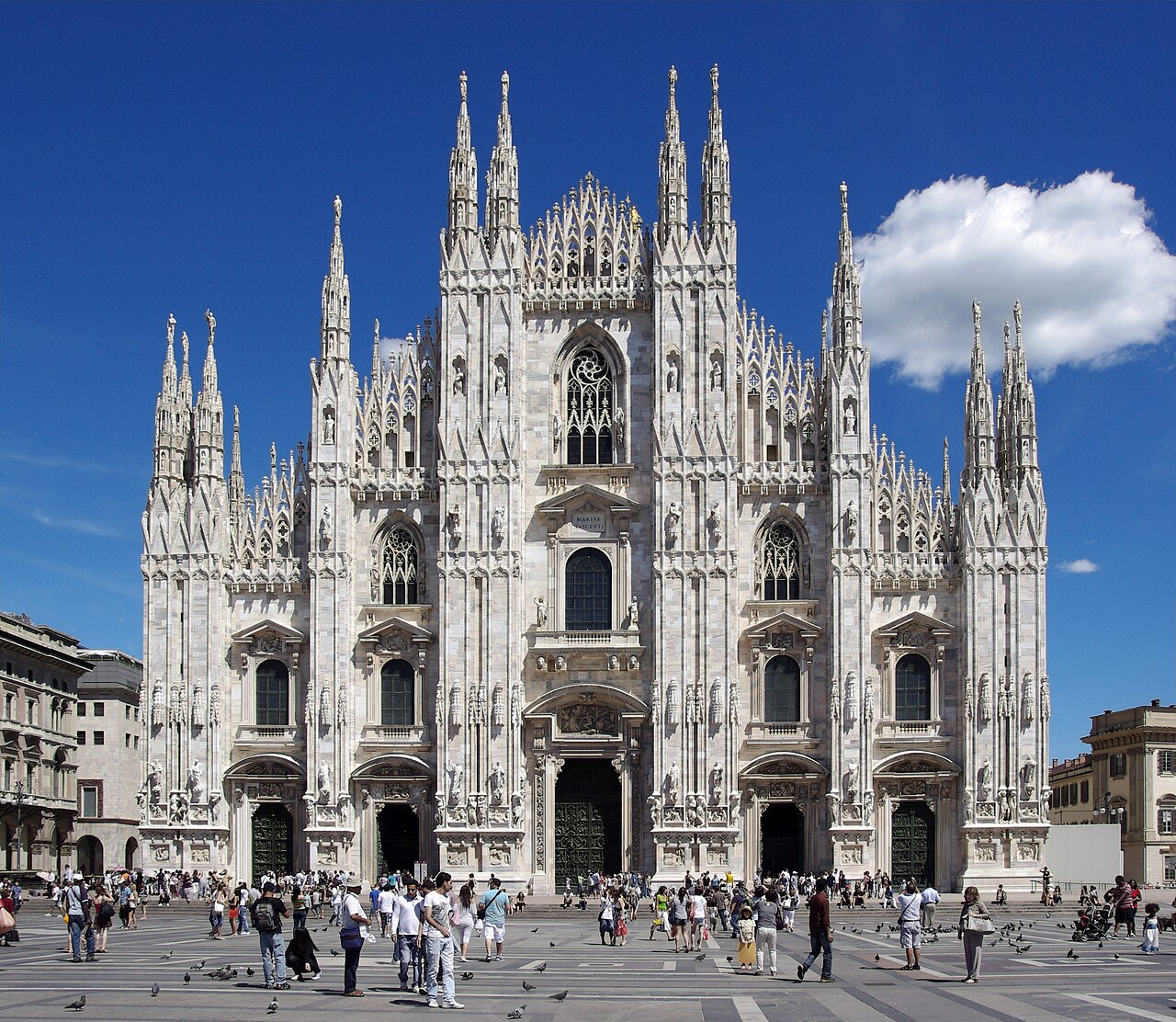
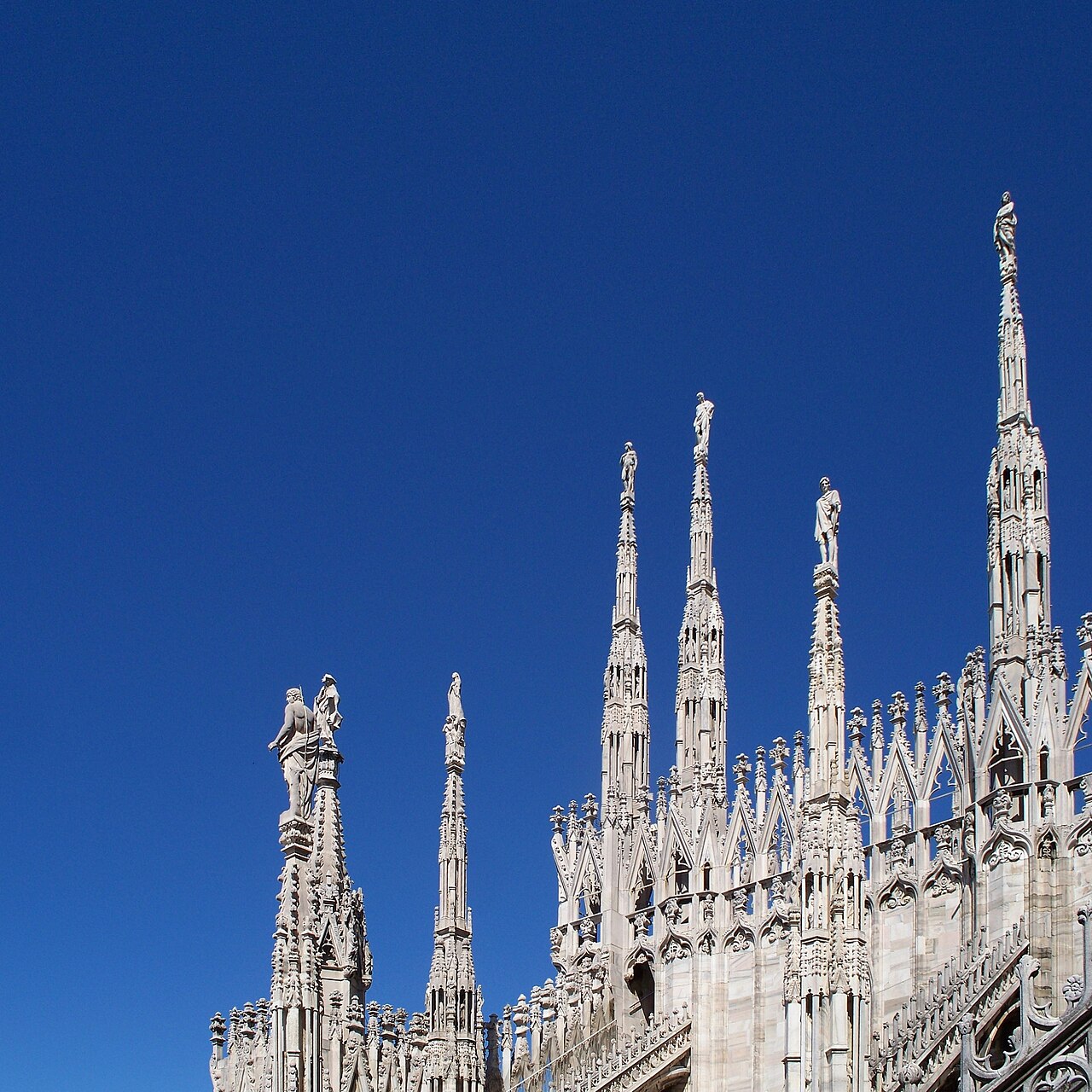
The cathedral's visual identity was shaped by a decisive pivot away from local tradition toward the grander vocabulary of French Gothic. Orsenigo's original plan called for a brick structure in the Lombard style, but Gian Galeazzo's desire to keep pace with continental fashion brought Nicolas de Bonaventure from France in 1389, introducing Rayonnant Gothic elements. The duke also granted the Fabbrica exclusive rights to the Candoglia marble quarry and freed it from taxation, ensuring the building would gleam rather than merely stand. A decade later, Jean Mignot arrived from Paris and delivered a scathing verdict: everything built so far was in peril of ruin and executed without proper science. Though his dire predictions never materialized, his criticism forced the Milanese engineers to refine their lifting techniques for stones reaching unprecedented heights. The result was a hybrid structure—Gothic in its soaring verticality and tracery, yet enriched by Renaissance accents like the Amadeo spire of 1507–1510, which somehow harmonized with the surrounding medieval fabric.
Sacred Seat and Institutional Memory
Long before the present cathedral rose, the site had already carried centuries of religious significance. Milan's street grid still radiates from the Duomo, a layout that mirrors the position of the public basilica facing the forum in Roman Mediolanum. The first cathedral, a basilica dedicated to St. Thecla, was finished by 355, and an adjoining church followed in 836. The ancient octagonal baptistery, the Battistero Paleocristiano, dates to 335 and remains accessible beneath the modern structure. A fire in 1075 destroyed the existing buildings, prompting their reconstruction as what would become the Duomo. Today the cathedral bears the formal title Metropolitan Cathedral-Basilica of the Nativity of the Blessed Virgin Mary and serves as the seat of the Archbishop of Milan, currently Mario Delpini. The Borromeo era marked a significant institutional shift: after Carlo Borromeo assumed the archbishopric, all lay monuments—including the tombs of several Visconti dukes—were removed from the church, reinforcing its identity as a purely sacred space rather than a dynastic mausoleum.
Common Misconceptions (Editorial)
- Despite centuries of construction delays, some assume the cathedral’s façade was finished only in the 19th century. In fact, Napoleon Bonaparte ordered its completion in 1805, though the French treasurer never reimbursed the costs. - Another misconception is that Leonardo da Vinci designed the central cupola. In reality, he submitted a model in 1488 but later withdrew; the cupola was completed between 1500 and 1510 under Ludovico Sforza. - People may think the cathedral was built continuously from 1386 until its official completion in 1965. In truth, construction stalled entirely from 1402 to 1480 due to lack of money and ideas.
Why It Matters (Editorial)
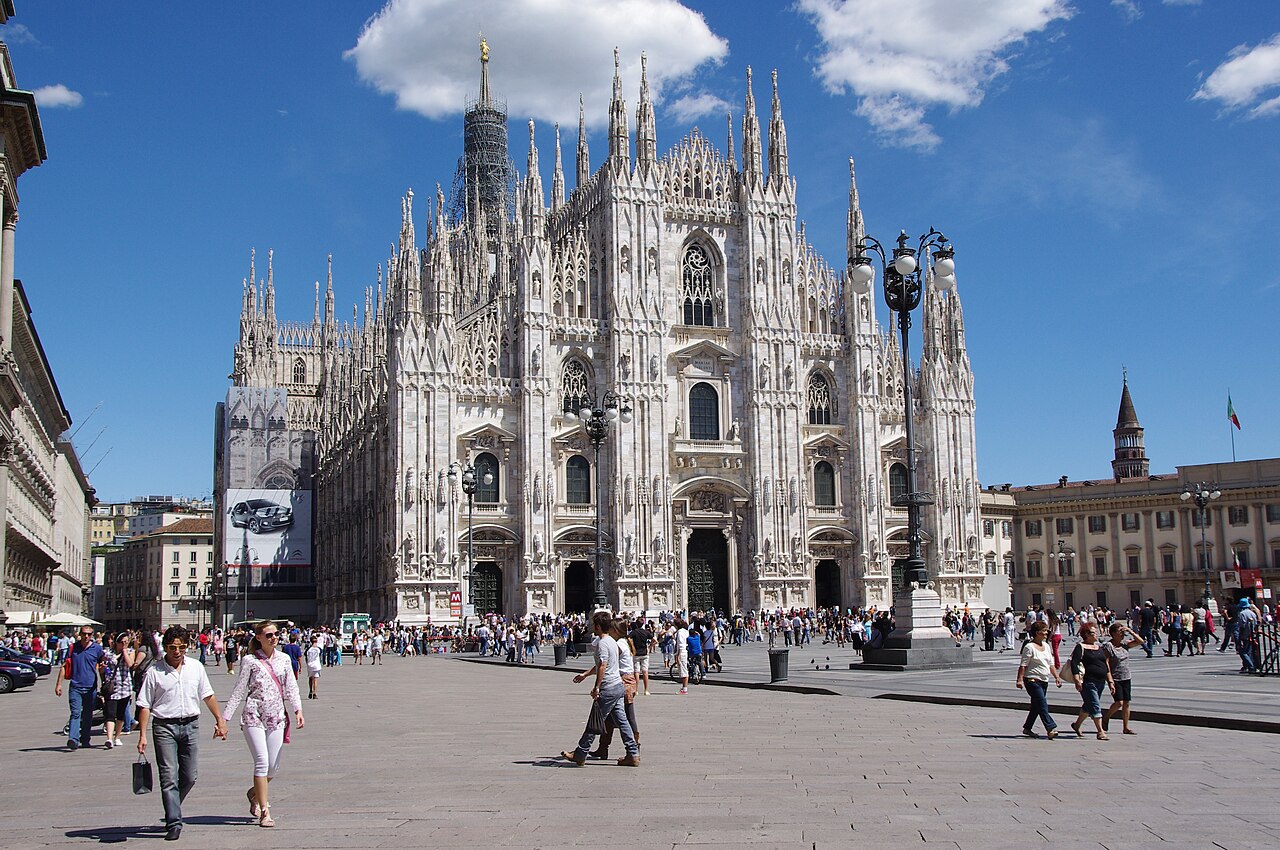
Milan Cathedral endures as a monument to human ambition and persistence, spanning nearly six centuries of shifting politics, artistic movements, and engineering challenges. Its towering spires and intricate façade remind us that great civic and spiritual projects often outlive their original patrons, becoming collective works of generations.
Gallery
Frequently Asked Questions
Who is Milan Cathedral?
Milan Cathedral, officially the Metropolitan Cathedral-Basilica of the Nativity of Saint Mary, is the principal church of Milan in Lombardy, Italy, and serves as the seat of the city's Archbishop. It is the largest church in the Italian Republic and ranks among the biggest cathedrals on Earth.
What is Milan Cathedral's role?
The cathedral functions as the mother church of the Archdiocese of Milan, currently led by Archbishop Mario Delpini. Its dedication to the Nativity of St. Mary (Santa Maria Nascente) anchors it to the city's religious and civic identity.
How does Milan Cathedral's construction story end?
Building began in 1386 and only reached full completion in 1965, meaning the project spanned nearly six centuries across many generations of craftsmen. The final touches in the mid-twentieth century closed what had been an extraordinarily long and evolving building campaign.
Why is Milan Cathedral important?
As the largest church in Italy and one of the largest in the world, it represents a remarkable feat of collective labor sustained over almost 600 years. Its blend of Lombard Gothic, Rayonnant Gothic, and Renaissance details makes it a landmark of medieval and early-modern architecture.
What architectural style is Milan Cathedral?
The cathedral is primarily Gothic, combining Lombard Gothic and Rayonnant Gothic elements with later Renaissance additions. Its tallest spire, crowned by the golden Madonnina statue, reaches 108.5 meters above the Milanese skyline.
More in Great Cathedrals 1-20
Spotted an error? Know more?
This is a living reference — every entry is fact-audited, and reader corrections feed straight into our audit queue. Suggest an edit · See this site's audit record