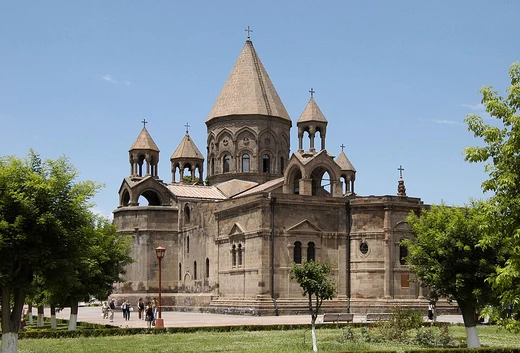
Westminster Abbey
Coronation and burial church of English and British monarchs.

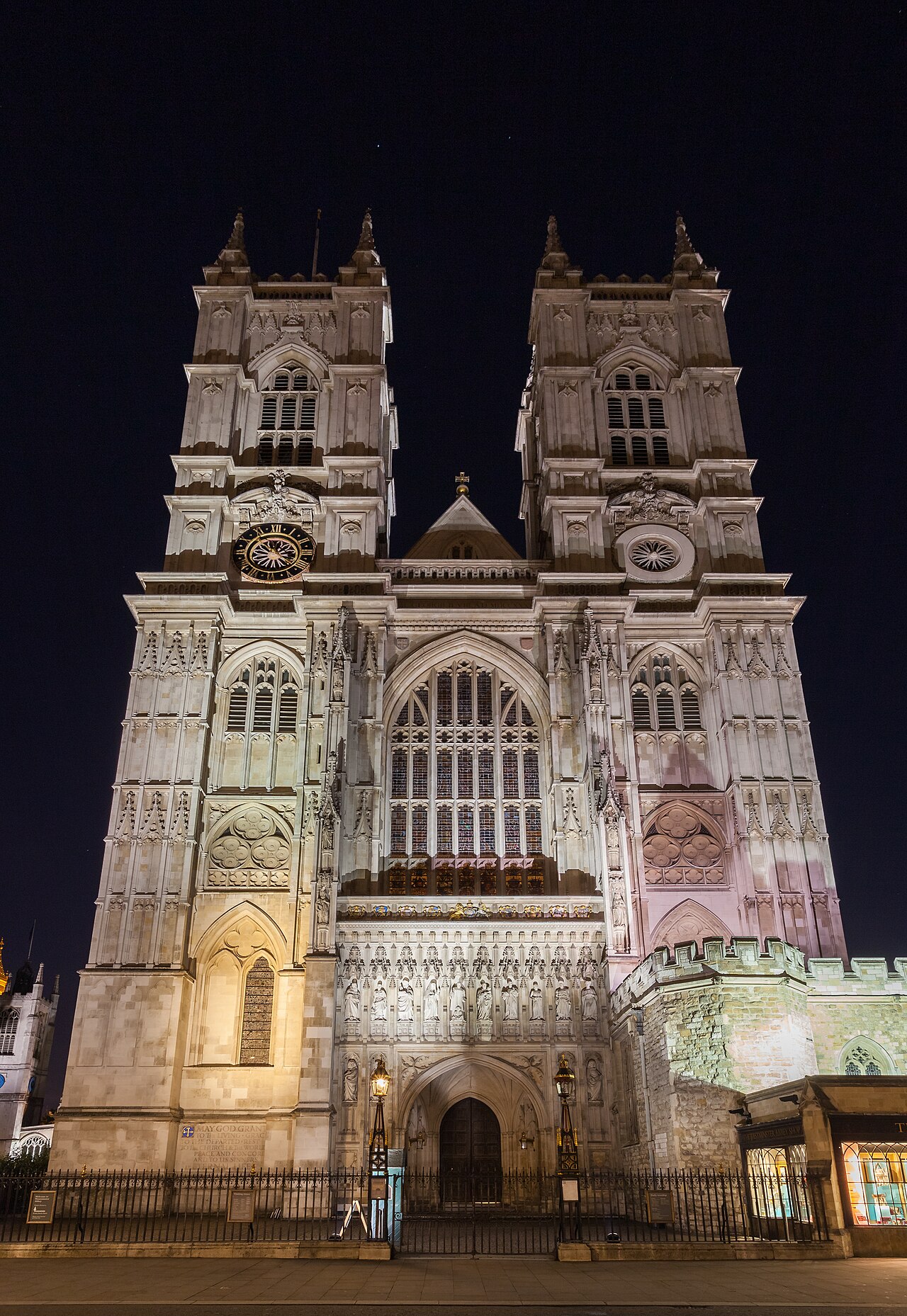
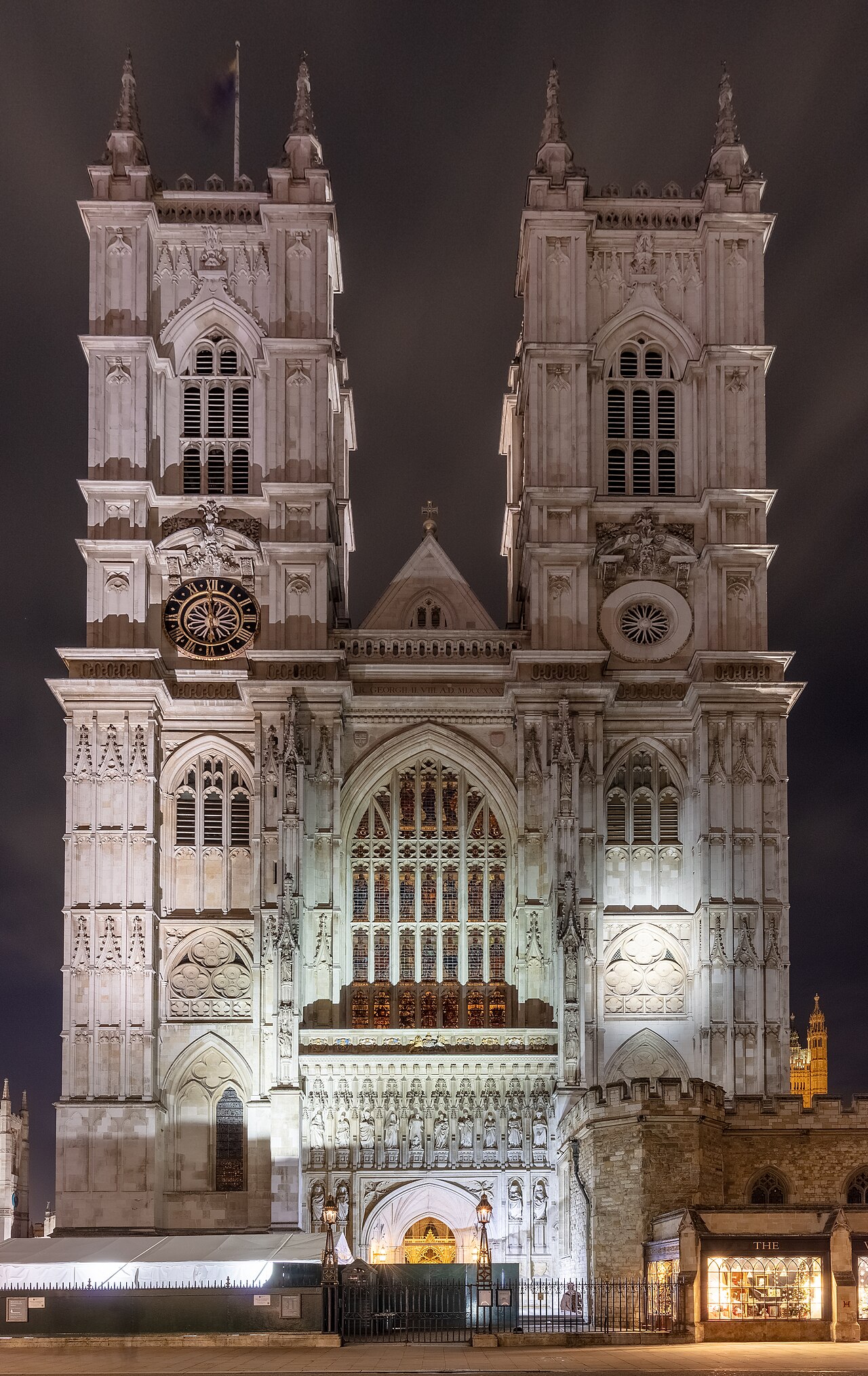
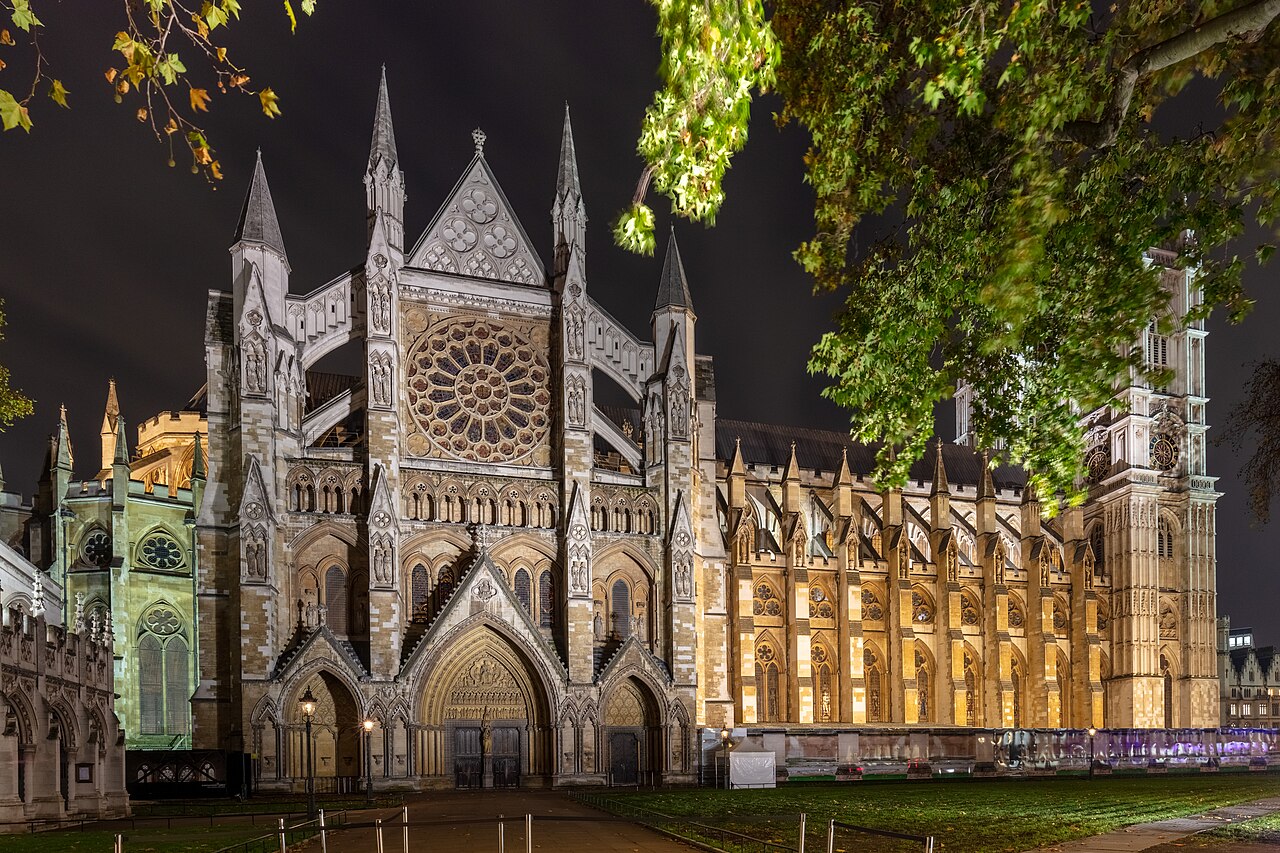
Diego Delso · CC BY-SA 4.0
Westminster Abbey, formally titled the Collegiate Church of Saint Peter at Westminster, is an Anglican church in the City of Westminster, London, England. Since 1066, it has been the location of the coronations of 40 English and British monarchs and a burial site for 18 English, Scottish, and British monarchs. At least 16 royal weddings have taken place at the abbey since 1100. The abbey, the Palace of Westminster and St Margaret's Church became a UNESCO World Heritage Site in 1987 because of their historic and symbolic significance.
- notable events
- Coronations since 1066 (40 monarchs), royal weddings since 1100
Lore & Background
Historians agree that a monastery dedicated to Saint Peter was on the site prior to the 11th century, though its exact origin is obscure. One legend claims it was founded by the Saxon king Sæberht of Essex, another by the fictional 2nd-century British king Lucius. A tradition holds that a young fisherman had a vision of Saint Peter near the site, and the Fishmongers' Company still gives the abbey a salmon each year in recognition. The origins are generally thought to date to about 959, when Dunstan and King Edgar installed a community of Benedictine monks on Thorney Island. Between 1042 and 1052, Edward the Confessor began rebuilding Saint Peter's Abbey in the Romanesque style. It was consecrated on 28 December 1065, about a week before Edward's death. His successor, Harold Godwinson, was probably crowned here, though the first documented coronation is that of William the Conqueror later that year.
Reader's Guide
Westminster Abbey's significance lies in its continuous role as the coronation church for English and British monarchs since 1066, and as a burial site for 18 monarchs and over 3,300 notable figures. It is a royal peculiar, accountable directly to the sovereign, and part of a UNESCO World Heritage Site. The church's architecture blends 13th-century French and English Gothic styles, with earlier Romanesque and later Baroque and modern sections. The abbey has been the setting for at least 16 royal weddings since 1100. Its history includes the capture of the Stone of Scone in 1296, for which a Coronation Chair was made, and the theft of the king's treasure from the crypt in 1303. The abbey's chapter house hosted assemblies from 1257 that were a precursor to the House of Commons. The building's completion spanned centuries, with contributions from monarchs including Richard II and Henry V.
Did You Know?
- The Fishmongers' Company still gives the abbey a salmon each year in recognition of a legend that a young fisherman had a vision of Saint Peter near the site.
- Edward the Confessor's body was found in perfect condition when his tomb was reopened in 1103, leading to his canonization in 1161.
- The golden shrine of Edward the Confessor was partly funded by a forced contribution of £2,500 from Licoricia of Winchester, the largest single donation at the time.
- In 1303, thieves broke into the crypt under the chapter house and stole a great deal of the king's treasure; fifty monks were imprisoned in the Tower of London on suspicion of helping them.
- The abbey's chapter house hosted assemblies from 1257 that were a precursor to the House of Commons.
Royal Coronations and Ceremonial Life
Since 1066, Westminster Abbey has served as the stage for the crowning of forty English and British monarchs, making it arguably the most consequential coronation site in the English-speaking world. The first documented coronation took place there that same year, when William the Conqueror was anointed, though Harold Godwinson was likely crowned in Edward the Confessor's earlier building just weeks before. Beyond coronations, the abbey has hosted at least sixteen royal weddings since 1100, threading a continuous line of royal ceremony through nearly a millennium. Eighteen English, Scottish, and British monarchs found their final resting place within its walls, from Edward the Confessor himself—interred a mere week after his death in January 1066—to later sovereigns. This concentration of royal ritual conferred a singular legal status: by 1222 the abbey was granted exemption from the Bishop of London's jurisdiction, answering only to the head of the Church, and in 1559 Elizabeth I formalized its unique position as a royal peculiar, accountable directly to the sovereign rather than to any diocesan authority.
Architectural Layers Across Centuries
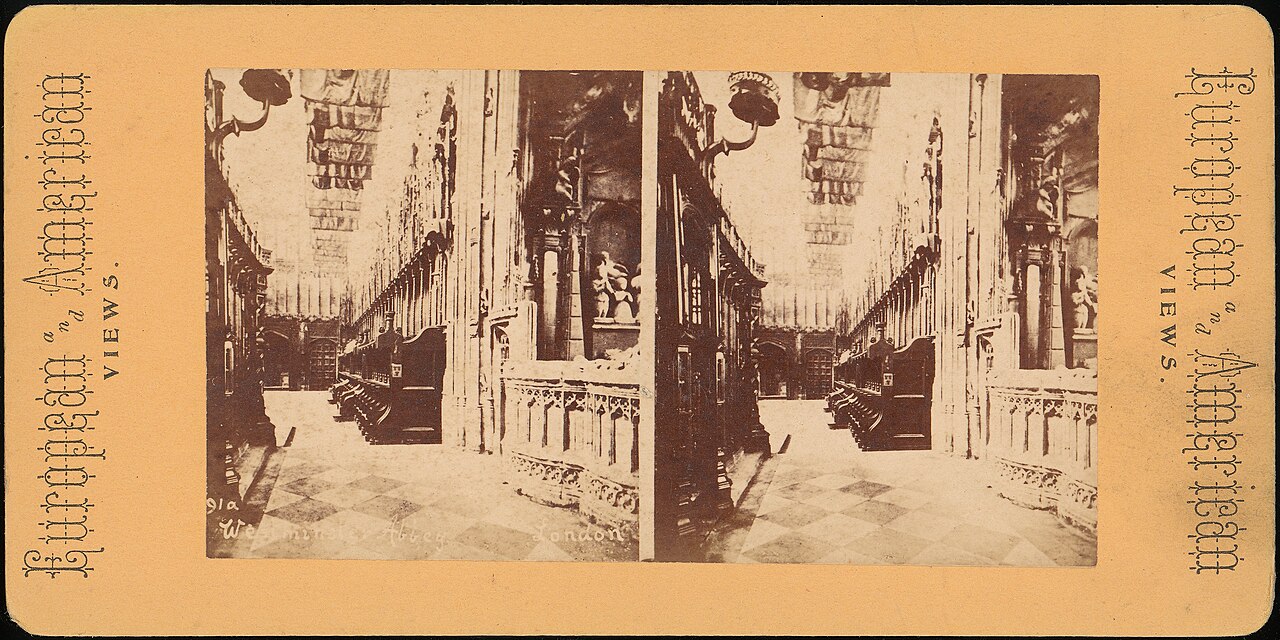
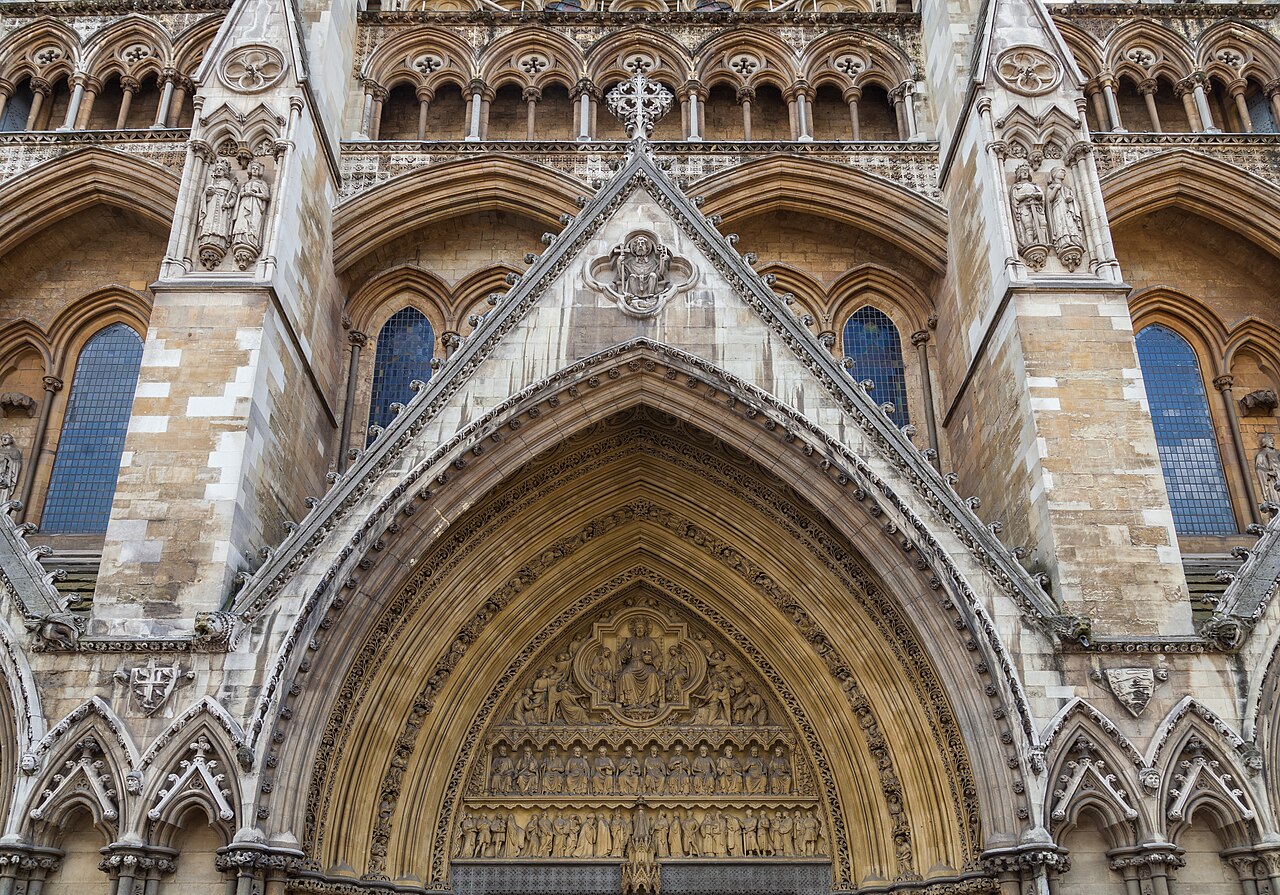
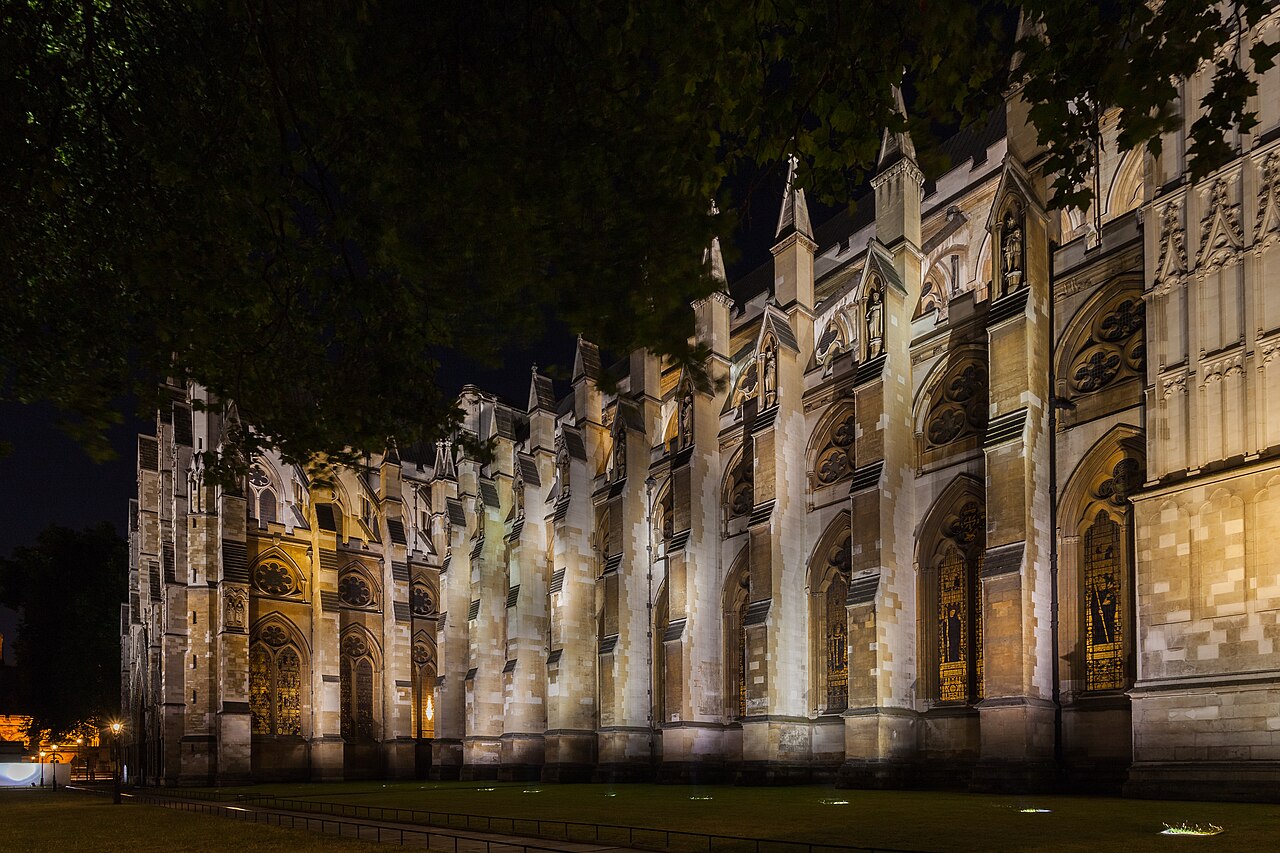
The physical fabric of Westminster Abbey tells a story of continuous reinvention. Edward the Confessor's Romanesque church, completed around 1060, was the first in England to employ a cruciform floorplan, and its foundations still lie beneath the present structure. When Henry III ordered a complete rebuilding in 1245, his master mason Henry of Reynes raised a Gothic edifice inspired by great French churches such as Reims Cathedral and the Sainte-Chapelle, incorporating the earlier Lady chapel into the new chevet. The result is a building that layers styles across centuries: thirteenth-century French and English Gothic dominates, yet Romanesque elements persist in older sections, while Baroque and modern interventions appear elsewhere. The Henry VII Chapel at the east end exemplifies Perpendicular Gothic so perfectly that the antiquarian John Leland dubbed it orbis miraculum, the wonder of the world. This palimpsest of architectural ambition, from Anglo-Saxon undercroft doorways to soaring perpendicular vaults, makes the abbey a living record of English building history.
Monastic Roots and Economic Power
Before it became a royal church, Westminster was a Benedictine monastery. Around 959, Dunstan and King Edgar established a community of monks on what was then Thorney Island, an island in the Thames. Archaeological finds of pottery and foundations confirm this early phase, though the original building has not survived. Under Edward the Confessor's patronage in the 1040s, the monastic community grew from a dozen monks to as many as eighty, sustained by generous endowments. The abbey's economic footprint was enormous: it owned land stretching from modern-day Oxford Street to the Thames, entire parishes in the City of London, wharfs, and estates across Middlesex, Hertfordshire, Essex, Oxfordshire, and Gloucestershire. The abbot served as lord of the manor for Westminster, a settlement of two to three thousand people that grew around the monastery. As a major employer and consumer, the abbey fueled the local economy, funded the construction of houses and shops, and distributed alms to the poor. This monastic world ended in 1559 with the dissolution, after which Elizabeth I reconstituted the church under direct royal authority.
A National Valhalla
William Morris called Westminster Abbey a National Valhalla, and the title feels apt given the extraordinary breadth of those interred within its walls. More than 3,300 people are buried there, spanning every stratum of British public life: monarchs, prime ministers, poets laureate, actors, musicians, scientists, military leaders, and the Unknown Warrior. This is not merely a royal mausoleum but a collective memorial to the nation's cultural and intellectual heritage. Edward the Confessor's own tomb was reopened in 1103, thirty-seven years after his death, and his body was found in perfect condition, a discovery that led to his canonization in 1161 and the creation of a golden shrine funded partly by a forced contribution from Licoricia of Winchester. The abbey's status as a burial ground for figures of national importance, combined with its coronation and wedding traditions, cements its role as a symbolic repository of British identity. In 1987, UNESCO recognized this significance by designating the abbey, the Palace of Westminster, and St Margaret's Church a World Heritage Site.
Common Misconceptions (Editorial)
Some assume that Westminster Abbey has always been an Anglican church, but it was originally a Catholic Benedictine monastery, as evidenced by the community of Benedictine monks installed around 959. Another misconception is that all English coronations occurred in the abbey; while 40 monarchs have been crowned there since 1066, the first documented coronation is that of William the Conqueror, not Harold Godwinson, whose coronation is only “probable.”
Why It Matters (Editorial)
Westminster Abbey matters not only as a sacred site but as a living chronicle of British sovereignty, having hosted coronations, weddings, and burials for nearly a thousand years. Its endurance reflects how faith, power, and national identity have intertwined through centuries of change, making it a rare place where history is both preserved and actively enacted.
Gallery
Frequently Asked Questions
What is Westminster Abbey?
Westminster Abbey is an Anglican collegiate church situated in the City of Westminster, London, formally titled the Collegiate Church of Saint Peter at Westminster.
What is Westminster Abbey's main role in British history?
Since 1066 it has served as the coronation church for 39 English and British monarchs and as the burial resting place for 18 of them. It has also hosted at least 16 royal weddings dating back to 1100.
How many monarchs have been crowned at Westminster Abbey?
A total of 39 English and British kings and queens have received their coronation there since the year 1066.
Is Westminster Abbey a UNESCO World Heritage Site?
Yes — in 1987 the abbey was granted UNESCO World Heritage status alongside the Palace of Westminster and St Margaret's Church, recognized for their historic and symbolic importance.
What is the formal name of Westminster Abbey?
Its full formal title is the Collegiate Church of Saint Peter at Westminster, and it operates as an Anglican church within the City of Westminster, London, England.
More in Great Cathedrals 1-20
Spotted an error? Know more?
This is a living reference — every entry is fact-audited, and reader corrections feed straight into our audit queue. Suggest an edit · See this site's audit record