Florence Cathedral
Largest masonry dome ever constructed, completed in 1436.

via Wikipedia: Florence Cathedral · see source
Florence Cathedral, formally the Cathedral of Saint Mary of the Flower (Italian: Cattedrale di Santa Maria del Fiore), is the cathedral of the Catholic Archdiocese of Florence in Florence, Italy. Commenced in 1296 in the Gothic style to a design of Arnolfo di Cambio and completed by 1436 with a dome engineered by Filippo Brunelleschi, the basilica is one of the world's largest churches and its dome remains the largest masonry dome ever constructed. The cathedral complex, which includes the Florence Baptistery and Giotto's Campanile, is part of the UNESCO World Heritage Site covering the historic centre of Florence.
- commenced
- 1296
- completed
- 1436
- architect
- Arnolfo di Cambio (initial design), Filippo Brunelleschi (dome)
- location
- Florence, Italy
- denomination
- Catholic
- dome_height
- 114.5 m (375.7 ft)
- building_area
- 8,300 m² (89,340 sq ft)
Lore & Background
Santa Maria del Fiore was built on the site of Florence's second cathedral dedicated to Saint Reparata. The city council approved Arnolfo di Cambio's design in 1294, and the first stone was laid on 9 September 1296 by Cardinal Valeriana, the first papal legate ever sent to Florence. After Arnolfo died in 1302, construction slowed for almost 50 years. In 1331, the Arte della Lana, the guild of wool merchants, took over patronage and appointed Giotto to oversee work; he designed and began the campanile. Work halted due to the Black Death in 1348, resumed in 1349 under Francesco Talenti, and by 1375 the old church of Santa Reparata was pulled down. The nave was finished by 1380, leaving only the dome incomplete until 1436.
Reader's Guide
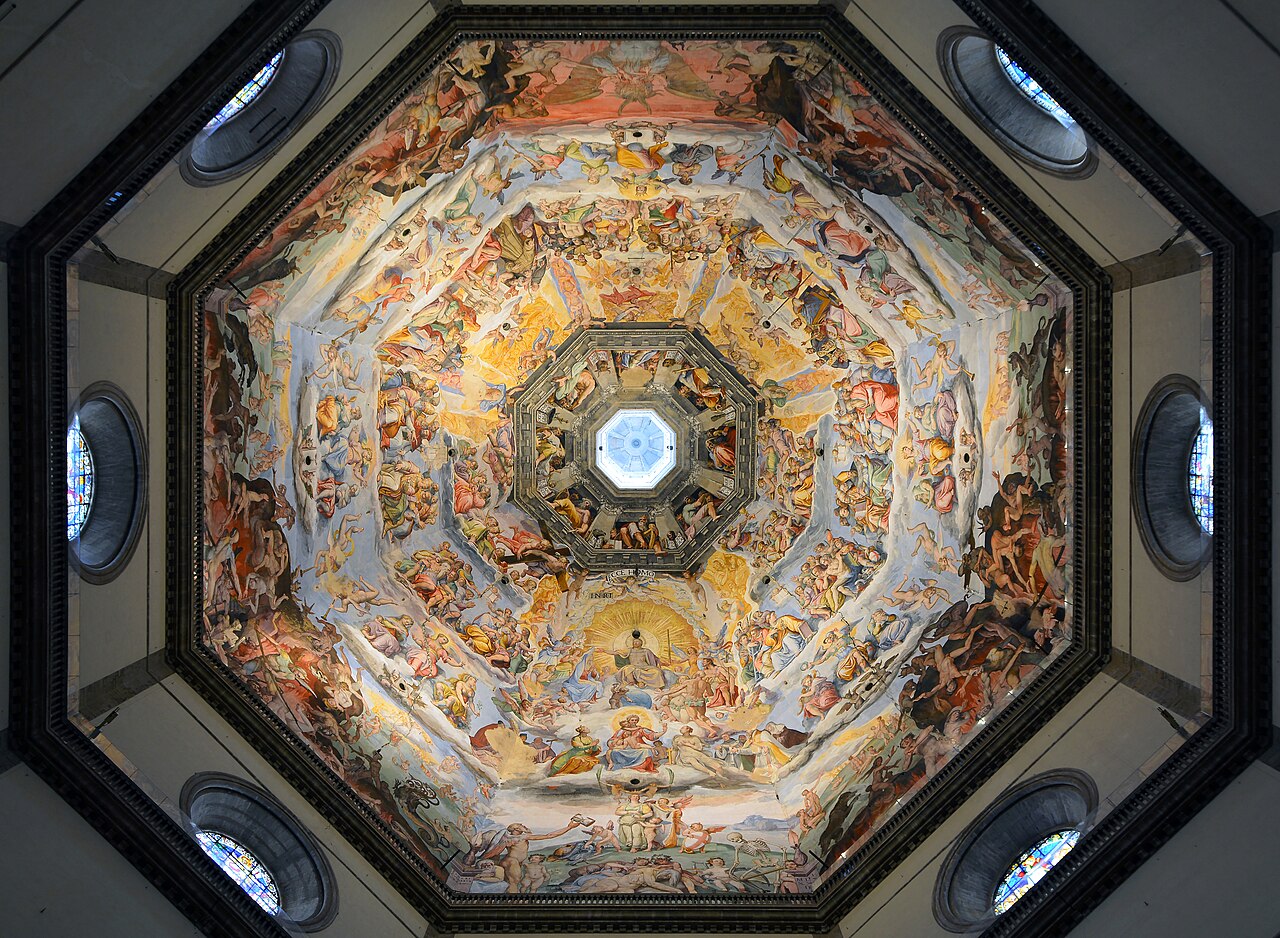
The cathedral's significance lies in its engineering and artistic achievements, particularly Brunelleschi's dome, which was the first octagonal dome in history built without a temporary wooden supporting frame. The dome's completion in 1436 marked a milestone in Renaissance architecture. The exterior, faced with polychrome marble panels in green, pink, and white, features a 19th-century Gothic Revival western façade by Emilio De Fabris. The cathedral is the mother church and seat of the Archdiocese of Florence, whose archbishop is Gherardo Gambelli. It remains a major tourist attraction of Tuscany and a key part of the UNESCO World Heritage Site of Florence's historic centre.
Did You Know?
- The first stone was laid on 9 September 1296 by Cardinal Valeriana, the first papal legate ever sent to Florence.
- The dome was the first octagonal dome in history built without a temporary wooden supporting frame.
- On 19 August 1418, the Arte della Lana announced a design competition for the dome; the two main competitors were Lorenzo Ghiberti and Filippo Brunelleschi.
- The cathedral was consecrated by Pope Eugene IV on 25 March 1436, the first day of the year according to the Florentine calendar.
- The western façade was not installed until 1887, based on a design by Emilio De Fabris.
A Century and a Half in the Making
Few buildings in Western history demanded such an extraordinary span of human effort. The site had long been occupied by the church of Santa Reparata, a structure from the early fifth century that, by the late thirteenth century, was crumbling and too small for Florence's growing population. The city council approved Arnolfo di Cambio's three-nave design in 1294, and on 9 September 1296 Cardinal Valeriana, the first papal legate ever sent to Florence, laid the first stone. Yet Arnolfo died in 1302, and construction ground to a near halt for nearly fifty years. A fresh surge of energy arrived in 1330 when the relics of Saint Zenobius were unearthed beneath the old church. The wool-merchants' guild, the Arte della Lana, assumed patronage in 1331 and installed Giotto as overseer in 1334. Giotto's tenure was brief—he died in January 1337—but his legacy included designing and beginning the campanile. After Andrea Pisano carried on until the Black Death of 1348 halted all work, a succession of architects including Francesco Talenti and Giovanni di Lapo Ghini gradually completed the nave by 1380. The old Santa Reparata was pulled down in 1375. Still, the great dome remained an empty gap in the skyline for another fifty-six years.
The Dome That Defied Convention
On 19 August 1418, the Arte della Lana announced a design competition to finally close the cathedral's gaping roof. The two principal rivals were master goldsmiths Lorenzo Ghiberti and Filippo Brunelleschi, whose lifelong rivalry had already been forged when Ghiberti won the 1401 competition for the Baptistery's bronze doors. Brunelleschi, backed by Cosimo de' Medici, claimed the commission. Ghiberti was named coadjutor with a salary matching Brunelleschi's, and though neither man received the promised prize of 200 florins, both were pledged equal credit. When Brunelleschi fell ill—or perhaps feigned it—Ghiberti briefly assumed control, only to concede the project was beyond his reach. By 1423 Brunelleschi held sole responsibility. Erection of the dome began in 1420 and was completed in 1436, making it the first octagonal dome in history raised without a temporary wooden centering frame. On 25 March 1436, Pope Eugene IV consecrated the finished cathedral on what the Florentine calendar counted as New Year's Day, and Guillaume Dufay's motet Nuper rosarum flores filled the nave. The structure remains, to this day, the largest masonry dome ever constructed.
A Face of Colored Stone
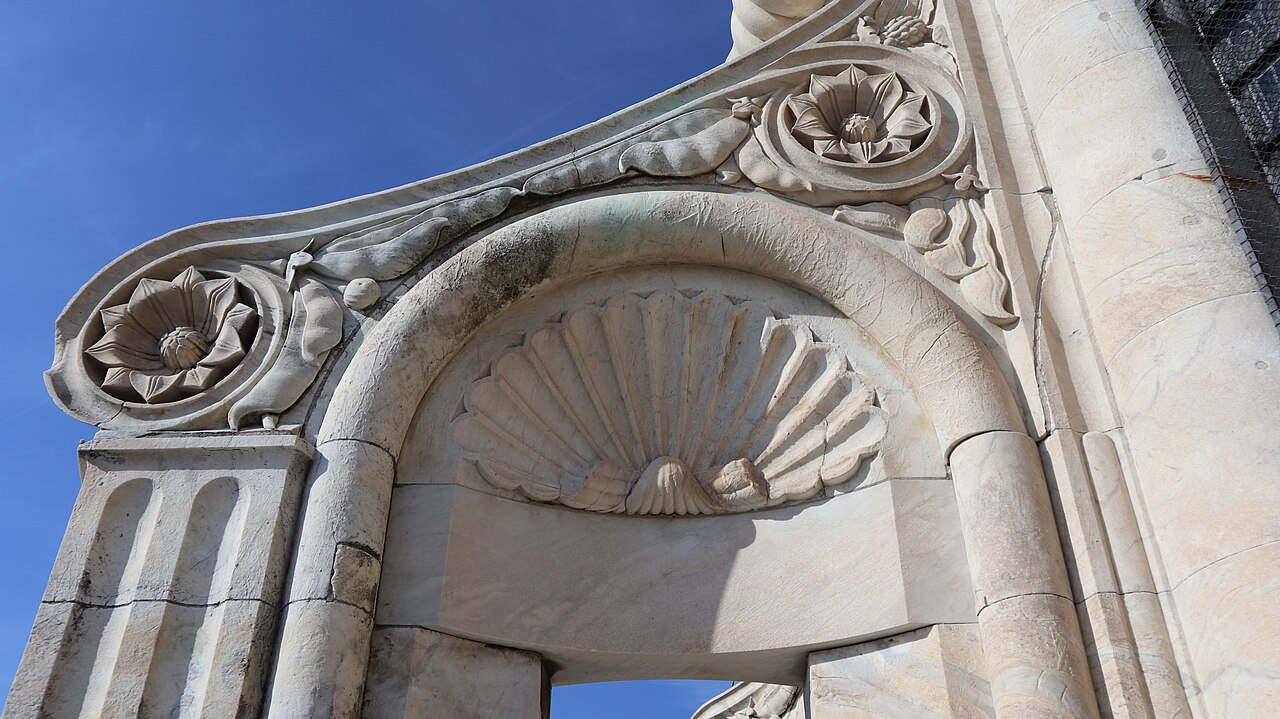
The cathedral's exterior presents one of Italy's most recognizable visual signatures: alternating bands of polychrome marble in white, green, and shades of pink. The stone comes from multiple quarries—Carrara for the white, Prato for the green, Siena for the red, and Lavenza among others. This cladding style, rooted in the Romanesque tradition of Tuscan church architecture seen in the Baptistery and Giotto's bell tower, was established by Arnolfo di Cambio in the fourteenth century but left unfinished for centuries. Lorenzo de' Medici launched a façade design competition between 1490 and 1491, yet it produced no lasting result. The western façade was not installed until 1887, when Emilio De Fabris fabricated his Gothic Revival design in polychrome marble, deliberately echoing the earlier Tuscan cladding. Two major side portals flank the crossing: the Porta dei Canonici to the south and the Porta di Mandorla to the north, the latter crowned by Nanni di Banco's mandorla of the Madonna of the Girdle. Nanni, who died young before the portal was finished, and the young Donatello contributed prophet figures to the pinnacles, now in the Museo dell'Opera del Duomo. Six side windows with delicate tracery punctuate the walls; only the four nearest the transept admit light, the other two serving purely as ornament.
Heart of the Archdiocese, Jewel of Tuscany
Formally titled the Cathedral of Saint Mary of the Flower, the basilica serves as the mother church and seat of the Catholic Archdiocese of Florence, currently led by Archbishop Gherardo Gambelli. Its scale places it among the largest churches in the world, a distinction earned in part by Brunelleschi's dome, which still holds the record as the largest masonry dome ever built. The cathedral does not stand alone: in the Piazza del Duomo it is joined by the Florence Baptistery and Giotto's Campanile, the three structures together forming a UNESCO World Heritage Site that encompasses the historic centre of Florence. This trio draws visitors from across the globe and remains a major tourist attraction of Tuscany. The very need for such a vast building reflected the civic pride of a city that, like Pisa and Siena, was undertaking ambitious cathedral reconstructions during the Late Medieval period. What began as a practical response to a crumbling fifth-century church and a swelling population ultimately became one of the defining symbols of Florentine identity, a monument whose construction spanned 140 years and whose consecration in 1436 marked the culmination of an entire era of artistic and engineering ambition.
Common Misconceptions (Editorial)
Some people think the entire cathedral was designed by Filippo Brunelleschi, but the initial design was by Arnolfo di Cambio, and Brunelleschi engineered only the dome. Others assume the cathedral was completed quickly after construction began in 1296, yet the dome was not finished until 1436, and the western façade was not installed until 1887.
Why It Matters (Editorial)
Florence Cathedral endures as a testament to human ingenuity and perseverance, overcoming plague, funding gaps, and engineering challenges over nearly 150 years to achieve a dome that remains the largest masonry dome ever built. It symbolizes the civic pride and artistic ambition of Renaissance Florence, drawing millions today to marvel at how a city united craft, faith, and science to create an enduring masterpiece.
Gallery
Frequently Asked Questions
Who is Florence Cathedral?
It is the mother church of the Catholic Archdiocese of Florence, formally dedicated to Saint Mary of the Flower, and has served as the city's principal place of worship since construction began in 1296.
What is Florence Cathedral's role?
As the seat of the Archbishop of Florence, it anchors the city's Catholic community and stands among the world's largest churches, crowned by the largest masonry dome ever built.
How does Florence Cathedral's story end?
After nearly 140 years of construction, the project was completed in 1436 when Filippo Brunelleschi's daring dome was finished, capping a structure originally designed by Arnolfo di Cambio in the Gothic style.
Why is Florence Cathedral important?
It solved one of the greatest engineering challenges of its era by raising a massive dome without centering, and the surrounding complex—including the Baptistery and Giotto's Campanile—forms part of a UNESCO World Heritage Site.
Who designed Florence Cathedral's dome?
Filippo Brunelleschi engineered the dome, which rises to roughly 114.5 meters and still holds the record as the largest masonry dome ever constructed.
More in Great Cathedrals 1-20
Spotted an error? Know more?
This is a living reference — every entry is fact-audited, and reader corrections feed straight into our audit queue. Suggest an edit · See this site's audit record