
York Minster
Seat of the archbishop of York and mother church of the province.

Mtaylor848 · CC BY-SA 4.0
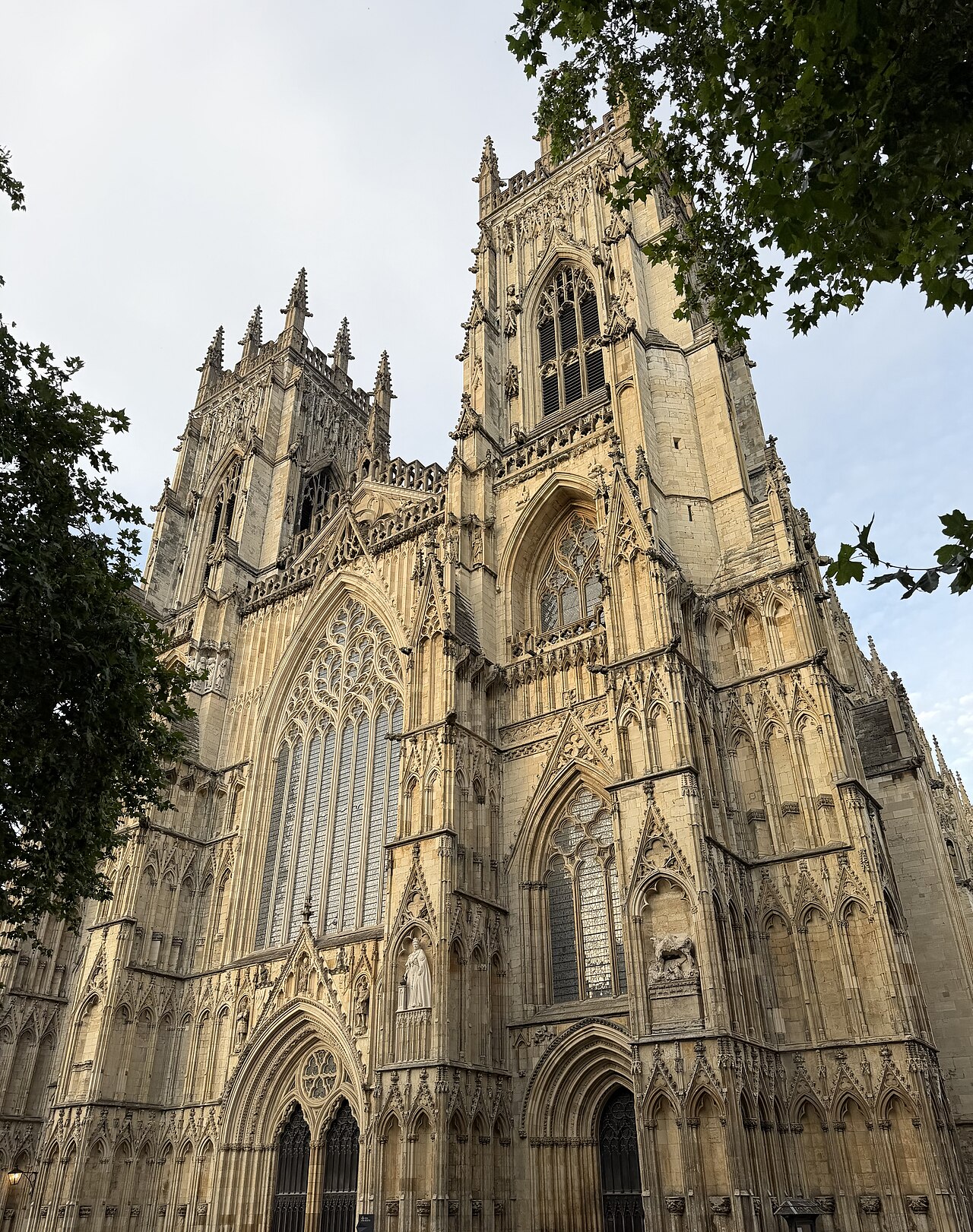
York Minster, formally the Cathedral and Metropolitical Church of St Peter in York, is an Anglican cathedral in York, North Yorkshire, England. It is the seat of the archbishop of York, the second-highest office of the Church of England, and serves as the mother church for the diocese of York and the province of York. The minster is a Grade I listed building and a scheduled monument, and it retains most of its medieval stained glass, a significant survival among European churches.
- location
- York, North Yorkshire, England
- denomination
- Anglican
- architectural_style
- Early English Gothic, Decorated Gothic, Perpendicular Gothic
- notable_feature
- Largest expanse of medieval stained glass in the world (east window)
- status
- Grade I listed building and scheduled monument
Lore & Background
The attached school and library became among the most substantial in Northern Europe by the 8th century. The cathedral passed through numerous invaders, and its history is obscure until the 10th century.
Reader's Guide
York Minster is a central monument of English ecclesiastical history, representing over eight centuries of continuous architectural development. Its construction spanned the Early English, Decorated, and Perpendicular Gothic styles, making it a textbook of medieval building techniques. The minster survived the English Reformation, which led to looting and destruction of tombs, windows, and altars, and the English Civil War, during which Thomas Fairfax prevented further damage. Excavations during that work uncovered remains of the Roman Principia under the south transept. The minster remains an active place of worship, a major tourist attraction, and a symbol of York's heritage.
Did You Know?
- The east window, depicting the Last Judgment, is the largest expanse of medieval stained glass in the world.
- The north transept contains the Five Sisters window, consisting of five lancets each over 53 feet high filled with grisaille glass.
Origins and the Early Christian Community
The story of York Minster begins far before the Gothic spires that define its silhouette today. Its exact location is lost to history, though it likely stood near the old Roman military headquarters, possibly beneath what is now Dean's Park. He also established an attached school and library that, by the eighth century, ranked among the most substantial in Northern Europe.
A Palimpsest of Gothic Styles
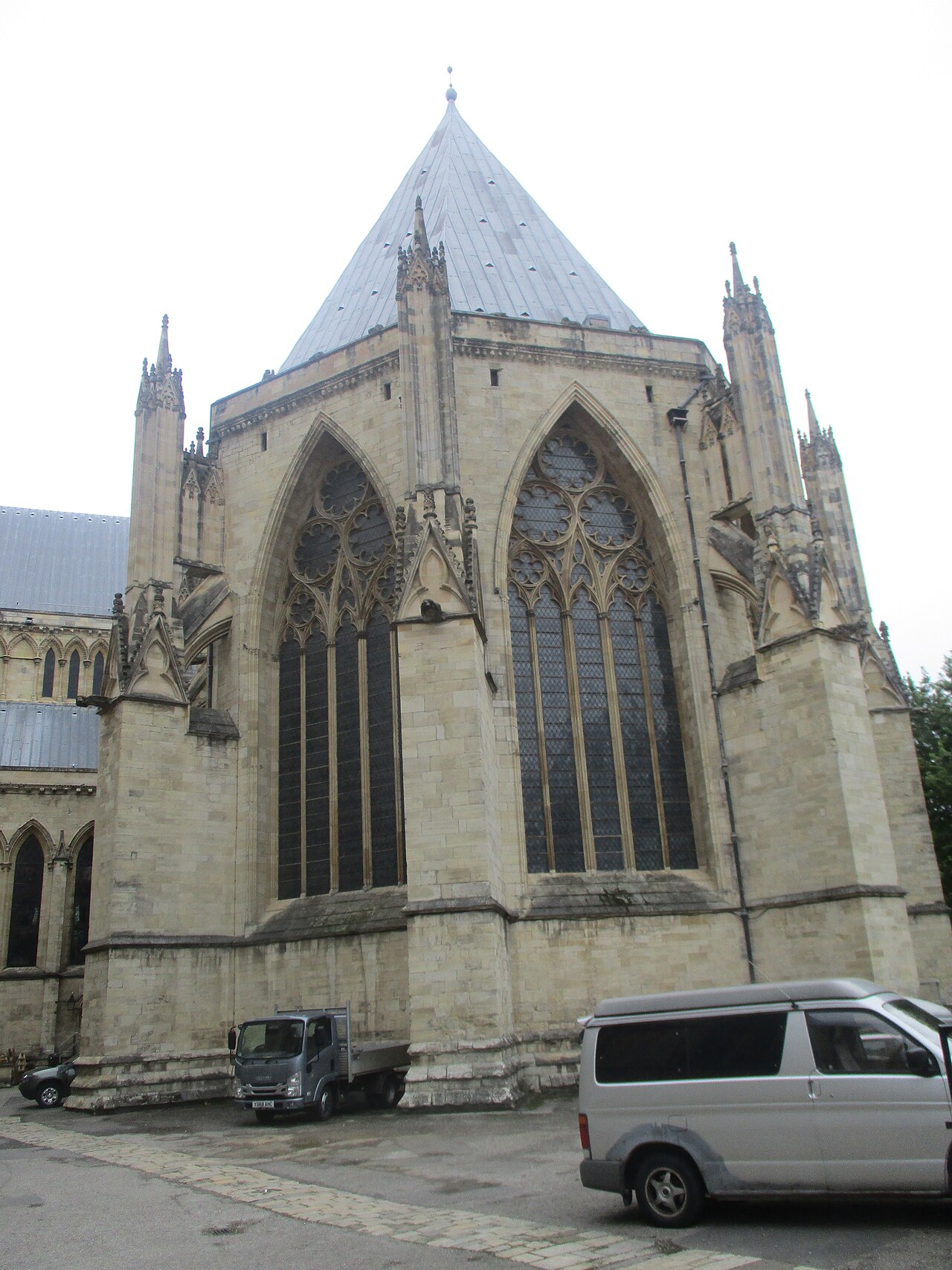
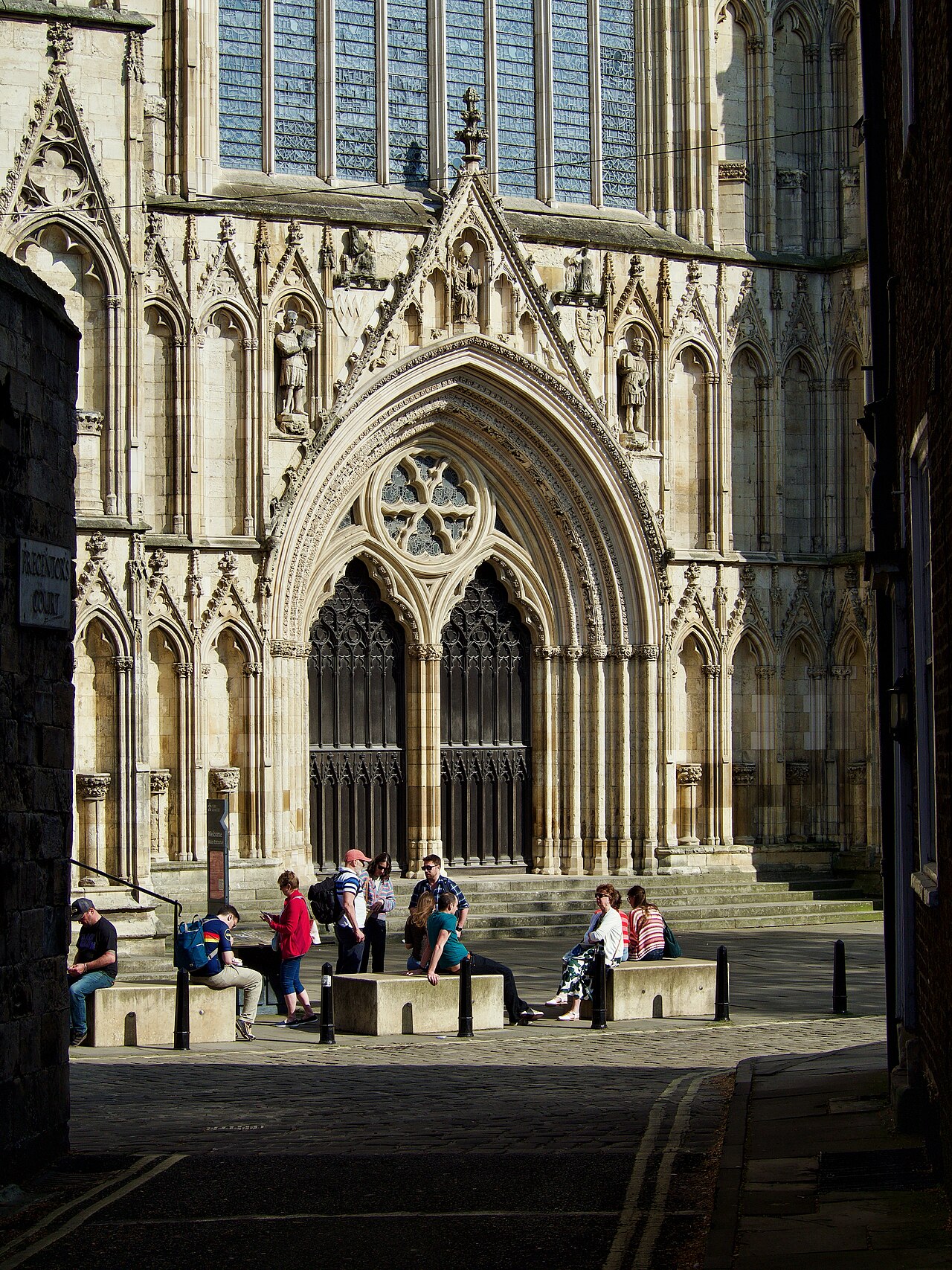
The cathedral that rose between the twelfth and fifteenth centuries is a layered record of shifting architectural fashion. The north and south transepts, finished in the 1250s, showcase Early English Gothic but differ noticeably in their wall elevations. A substantial central tower with a wooden spire followed. Construction then shifted to the eastern arm and its chapels, where the Norman choir was demolished to make way for Perpendicular Gothic design.
Stained Glass as a Living Heritage
Few European cathedrals can claim the extraordinary survival of medieval stained glass that York Minster retains. Its east window, depicting the Last Judgment, stands as the largest single expanse of medieval stained glass anywhere in the world, a breathtaking testament to the skill of medieval glaziers and the care of successive generations who preserved it. In the north transept, the Five Sisters window commands attention through sheer scale and restraint: five lancets, each rising over 53 feet, are filled entirely with grisaille glass—pale, uncoloured panels that allow natural light to flood the space in a cool, silvery glow. The contrast between the narrative richness of the east window and the austere luminosity of the Five Sisters illustrates the range of medieval glassmaking artistry housed within these walls. That so much original medieval glass remains intact in a building that has endured fires, invasions, and centuries of use makes York Minster a singular survivor in the broader landscape of European ecclesiastical art.
Institutional Authority and Protected Status
Formally known as the Cathedral and Metropolitical Church of St Peter, York Minster occupies a place of singular importance within the Church of England. It serves as the seat of the Archbishop of York, the second-highest office in the national church, and functions as the mother church for both the diocese of York and the wider province of York. Day-to-day governance rests with its dean and chapter, a structure that has maintained continuity through centuries of political and religious upheaval. The very word 'minster' in its name is a relic of the Anglo-Saxon period, when it originally described a missionary teaching church; today it survives purely as an honorific. The building's significance is formally recognised through its designation as a Grade I listed building and a scheduled monument, the highest levels of statutory protection available in England. These designations underscore that the minster is not merely a functioning place of worship but a national heritage asset of the first order.
Common Misconceptions (Editorial)
Some believe York Minster is a Catholic cathedral, but it is an Anglican cathedral and the seat of the Church of England’s archbishop of York. Others assume its stained glass is largely modern or reconstructed, but the minster retains most of its medieval stained glass, including the world’s largest expanse of it in the east window.
Why It Matters (Editorial)
York Minster matters not only as a living center of Anglican worship and authority, but as a rare architectural and artistic record of medieval craftsmanship that survived centuries of political upheaval. Its vast expanse of original stained glass offers an irreplaceable window—literally—into the beliefs, aesthetics, and technical skill of the Middle Ages, making it a monument of enduring cultural and historical significance.
Gallery
Frequently Asked Questions
What is York Minster?
York Minster is the Anglican cathedral in York, North Yorkshire, formally called the Cathedral and Metropolitical Church of St Peter. It is a Grade I listed building and scheduled monument, representing one of England's most significant medieval structures.
What role does York Minster play in the Church of England?
It serves as the seat of the Archbishop of York, the second-highest ecclesiastical office in the Church of England. The cathedral also functions as the mother church for both the diocese and the broader province of York.
What is York Minster's most famous feature?
The cathedral holds the largest surviving expanse of medieval stained glass in the world, centred on its great east window. This collection has remained largely intact, a rare survival among European churches.
Why is York Minster considered important?
Beyond its three-century span of Gothic architecture, it anchors the spiritual and administrative life of the northern half of the Church of England. Its medieval stained glass and unbroken worship lineage back to the 7th century make it a unique cultural and religious landmark.
More in Great Cathedrals 1-20
Spotted an error? Know more?
This is a living reference — every entry is fact-audited, and reader corrections feed straight into our audit queue. Suggest an edit · See this site's audit record