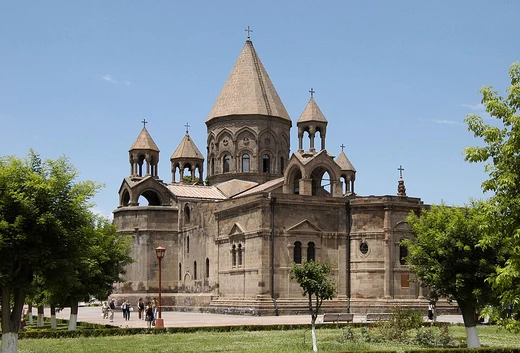
Reims Cathedral
Traditional coronation site of French kings and Gothic masterpiece.

via Wikipedia: Reims Cathedral · see source
Reims Cathedral, also known as Notre-Dame de Reims, is a Catholic cathedral in the French city of Reims and the seat of the Archdiocese of Reims. It was dedicated to the Virgin Mary and was the traditional location for the coronation of the kings of France. The cathedral is considered to be one of the most important works of Gothic architecture. A major tourist destination, it receives about a million visitors annually. It became a UNESCO World Heritage Site in 1991.
- location
- Reims, France
- type
- Catholic cathedral
- architectural_style
- High Gothic
- construction_start
- 13th century
- construction_end
- 14th century
- UNESCO_designation
- 1991
- annual_visitors
- about a million
Lore & Background
The cathedral is thought to have been founded by the bishop Nicasius in the early 5th century. Clovis was baptized a Christian here by Saint Remigius, the bishop of Reims, about a century later. He was the first Frankish king to receive this sacrament. Construction of the present cathedral began in the 13th century and concluded in the 14th century. A prominent example of High Gothic architecture, it was built to replace an earlier church destroyed by fire in 1210. Although little damaged during the French Revolution, the present cathedral saw extensive restoration in the 19th century. It was severely damaged during World War I and was again restored in the 20th century.
Reader's Guide
The prestige of the Holy Ampulla and the fact that Clovis I had been baptised there led to Reims becoming the regular site of the coronation of the French monarch, a tradition established with the coronation of Henry I of France in 1027. All but seven of France's future kings — Hugh Capet, Robert II, Louis VI, John I, Henry IV, Louis XVIII, and Louis Philippe I — were crowned at Reims. The cathedral hosted other royal ceremonies as well: on 19 May 1051, Henry I of France and Anne of Kiev were married in the cathedral. Since the 1905 law on the separation of Church and state, the cathedral has been owned by the French state, while the Catholic Church has an agreement for its exclusive use. The French state pays for its restoration and upkeep.
Did You Know?
- The cathedral was built to replace an earlier church destroyed by fire on 6 May 1210, allegedly due to 'carelessness.'
- Unusually, the names of the cathedral's successive architects are known, recorded in a labyrinth built into the floor of the nave (destroyed in 1779).
- Clovis I was baptized here in about 496 A.D. by Saint Remigius, the first Frankish king to receive this sacrament.
- The cathedral was one of the first buildings to use stones and other materials of standardized sizes, speeding construction.
- All but seven of France's future kings were crowned at Reims, a tradition established with the coronation of Henry I in 1027.
Common Misconceptions (Editorial)
- A common misconception is that Reims Cathedral was built as a coronation site from the start. In fact, the tradition of crowning kings there began with Henry I in 1027, well before the present cathedral was constructed in the 13th and 14th centuries. - Some may believe the cathedral was largely destroyed during the French Revolution. However, the facts indicate it was "little damaged" during that period, though it did suffer severe damage in World War I.
Why It Matters (Editorial)
Reims Cathedral endures as a monument to French national identity, having hosted the coronations of all but seven French kings over nearly a millennium. Its survival through revolution and world war, followed by careful restoration, also makes it a powerful symbol of resilience and the enduring value of cultural heritage.
Frequently Asked Questions
Who is Reims Cathedral?
Reims Cathedral, also called Notre-Dame de Reims, is a Catholic cathedral in the French city of Reims that serves as the seat of the Archdiocese of Reims. It is widely regarded as one of the supreme achievements of High Gothic architecture.
What is Reims Cathedral's role?
For centuries the cathedral was the traditional venue where French kings were crowned, placing it at the symbolic center of the monarchy. Today it also draws roughly one million visitors a year as a major pilgrimage and tourism destination.
When was Reims Cathedral built?
The present structure was raised across the 13th and 14th centuries, squarely within the High Gothic period. Its sculptural program and structural design are still studied as benchmark examples of that era.
Why is Reims Cathedral important?
It is considered one of the most significant works of Gothic architecture in the Western world and was inscribed as a UNESCO World Heritage Site in 1991. Its dual legacy as both a religious center and the coronation church of French kings gives it a cultural weight that goes far beyond its local region.
Where can I find Reims Cathedral?
It stands in the city of Reims in northeastern France, anchoring the religious and historical identity of that area. Its role as the coronation site for French monarchs elevated its symbolic importance well beyond the immediate community.
More in Great Cathedrals 1-20
Spotted an error? Know more?
This is a living reference — every entry is fact-audited, and reader corrections feed straight into our audit queue. Suggest an edit · See this site's audit record